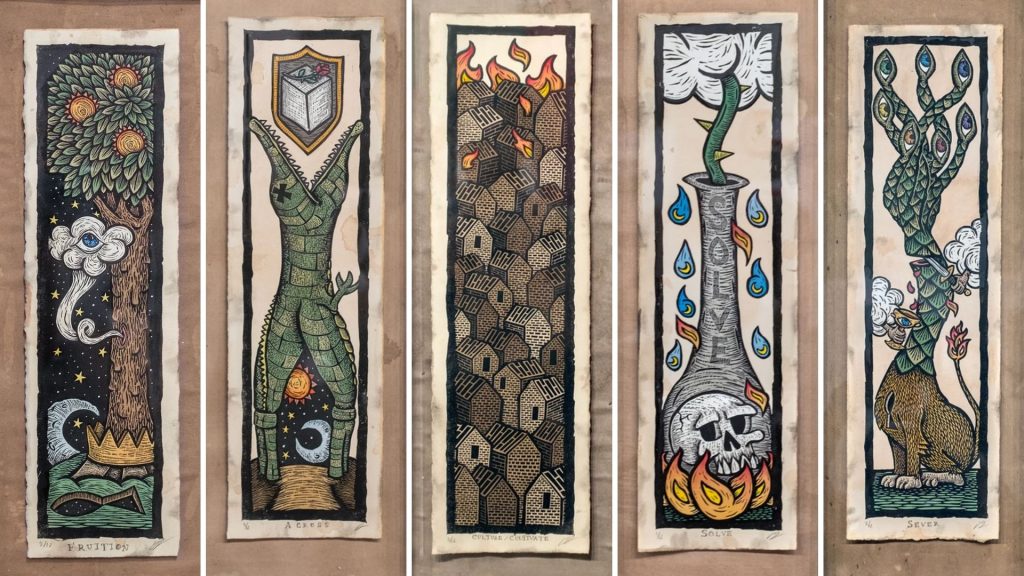
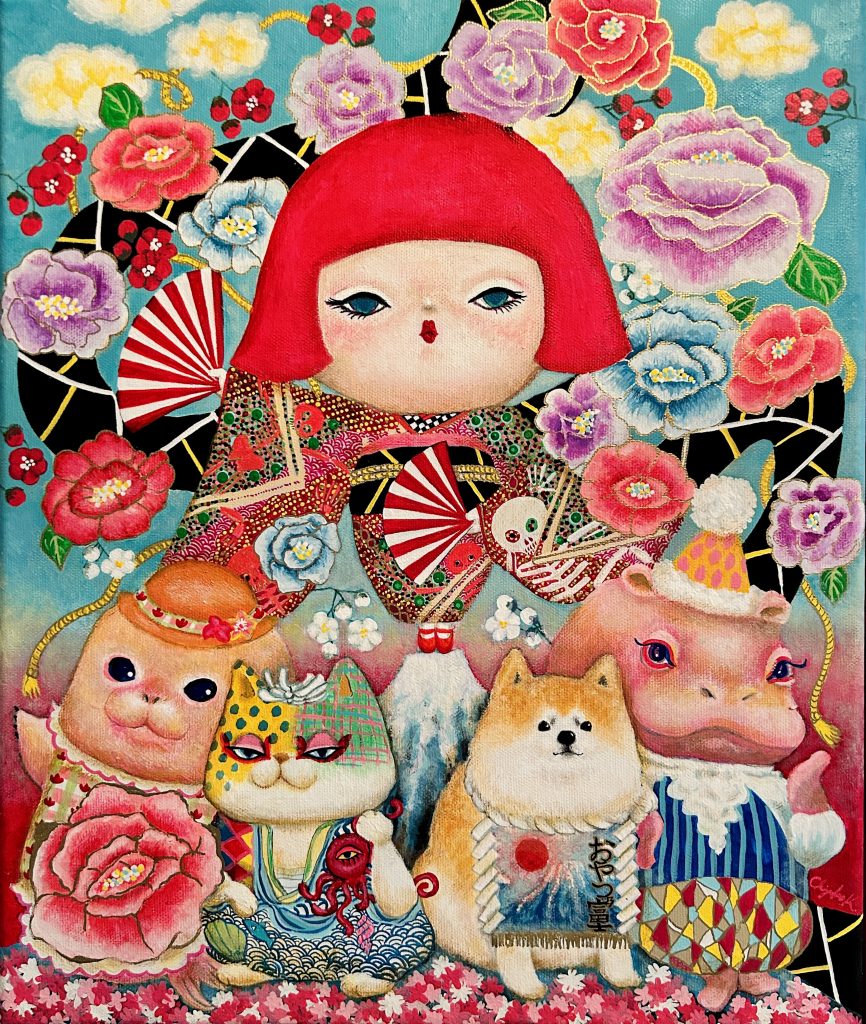
Lori Nelson has spent a lifetime proving that being an artist isn’t about credentials—it’s about showing up. From a dreamy child in small-town Colorado to a working artist in the Catskill Mountains, she’s built her practice on daily commitment and raw honesty. But in 2022, a massive brain hemorrhage left her in a coma, unable to walk or talk, with permanent numbness on her right side.
Lying alone in a hospital bed, she faced her deepest fear: Who will I be if I can’t paint?
What she discovered—that muscle memory and decades of devoted practice could overcome even catastrophic injury—redefined everything she knew about art and survival. Here, Nelson shares her hard-won wisdom about declaring yourself an artist, painting through fear, and why the simplest path is often the truest one.
Where Are You From?
The Catskill Mountains, New York
Where do you long to live (reality or fantasy)?
I love where I live, close to nature and with my little studio with its woodstove!
What started you on your journey into art professionally?
I was always drawing. As a child in a small Colorado town, I didn’t fit in particularly and to this day, I struggle to navigate this world and its people. I always saw drawing and painting as an escape hatch to a reality where I felt secure, even if it was very unearthly.
My constant reverting to drawing did attract notice. I received multiple report cards where I was criticized for being dreamy and for drawing pictures.
Thankfully my mother saw an artist and not a delinquent and found me a private art instructor in our tiny town: a divorced woman with 7 feral kids, a flock of indoor chickens, and a penchant for tole painting. I ended up babysitting her children while she talked me through paint technique, and, always, prepared their dinner. What I learned wasn’t really art technique but that I was worth private lessons. I learned that I was a real artist.

How has your art changed and evolved over the years?
My work is largely narrative and so fluctuates to reflect current life-events. College work touched on Feminism. As a newly married, young mother, my paintings largely focussed on the ups and downs of motherhood. When my husband and I struggled financially, my work showed the fight to get ahead. Later, when we left the West for NYC, my work became very urban-fascinated with big shift toward Nature when we left the city for the Catskill mountains.
If your artwork could come to life and interact with you, what kind of conversation would you have with it?
I would ask my artwork if it thinks I’m finally learning the Big Lesson: DO NOT OVERTHINK! The simpler an idea and composition, the easier the painting is to complete. When you reach a point where the painting has been enjoyable and just flows, just accept it. Painting doesn’t have to be arduous to be good. In fact the looser, the better somehow.

What is the one statement you could give to your younger self that you would give anything to go back and relay to them at a pivotal moment?
To be a real artist, you don’t need a piece of paper or certificate. You simply declare yourself an artist and if you work every day on art, you’re legit. Don’t wait for the big coronation. Just wear the crown.
In what ways do you think your personal experiences and emotions shape the way you connect with your work?
My work exists because of my inner world. When life gets wobbly and scary, I know I’m going to be able to paint it out and that is somehow a comfort. Right now, many of us are scared about the political climate here in the USA and if I didn’t know that I could create work about this fear, I really don’t know what I would do.

What is the most unexpected thing to occur with your work through the years that shifted your perspective in a way you never anticipated?
In 2022, I randomly had a massive brain hemorrhage. I had been foraging mushrooms and then later had celebrated a friend’s 7 year-old’s birthday and, going to bed with a headache, some time during the night I must have burst a vessel in my brain. My husband found me unconscious on the bathroom floor and after a stroke and coma, and emergency brain surgeries, I woke up a month later far away and totally messed up. Along with not understanding where I was, I couldn’t walk, talk, or think properly. I believed I was a hostage and the nurses and my family were kept busy thwarting my escape plans.

After another month in a rehab hospital, I learned to walk, talk, and eat again. I wondered when I would “get better” and it didn’t hit me until I was released that there were things that I would never recover. One of the remaining deficits from this incident is that the right side of my body is numb. I remember lying in the dark, alone in the hospital, thinking, how will I paint? Who will I be if I can’t paint?
To this day, I still have no feeling on my right side, but, probably because of constant lifelong practice, I can still use a paintbrush. Weirdly, I think muscle memory plays a part here. I’ve had to adjust, but I’m so grateful that I can usually figure out how to paint.

Have you ever imagined your art as a time capsule—what do you think future generations would think of it?
Usually I try to be timeless in my work, but occasionally, especially in this political moment, I think it’s important to paint about the current times. As artists, it’s our responsibility to feel and respond to the times. I hope future generations will see that I felt these days in my bones.
We have a thing for oversharing...
New artist interviews, articles, books and more!
What advice would you give an artist starting out (young, middle-aged, old – any age) who wants to do it professionally?
I maintain that if you want to be a professional artist, declare it and be it. Commit to doing art every single day, even if it’s just jotting down ideas.
I know that it’s hard to work art in when you’ve got work, family, school, etc. But if you declare yourself and do even a little, daily, it’ll add up.
Then spread it around! Hold IRL events like open studios or art chats.
Like the legendary Tim Curry sings, “Don’t dream it, be it.”