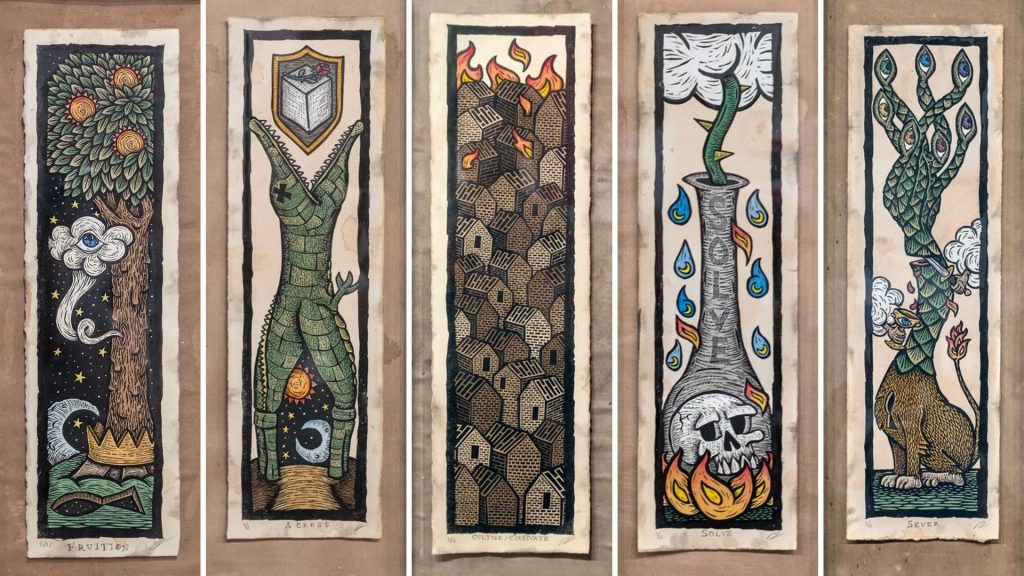
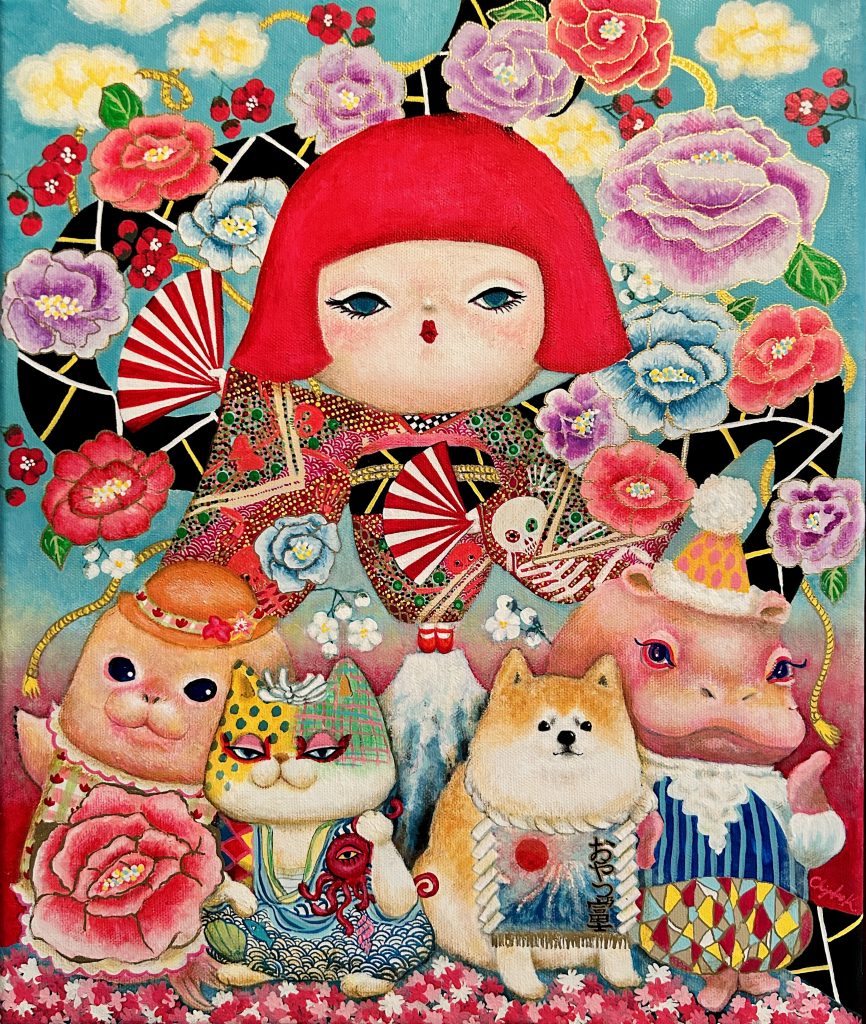
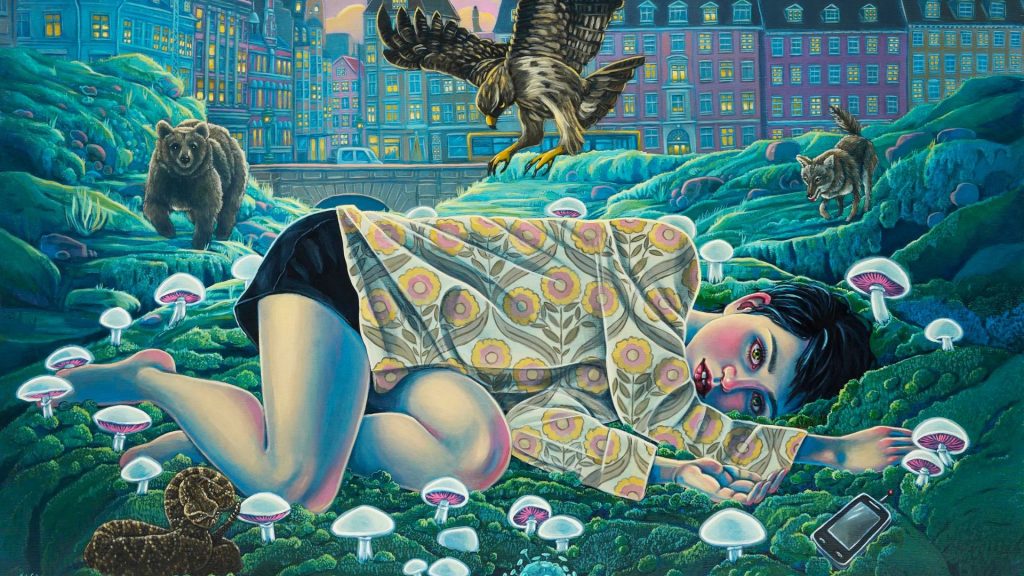
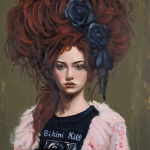
Kathleen is a self-taught illustrator based in New Zealand, known for crafting surreal, emotionally charged imagery that defies the conventions of traditional illustration. With no formal art education, Anna carved her own path—developing a distinctive style that merges dreamlike scenes with haunting, expressive portrayals of the feminine form.
Her work often feels like a still frame from an otherworldly narrative, inviting viewers into a space where vulnerability, strength, and surreal beauty coexist. Each piece whispers a story, layered with personal symbolism and quiet intensity.
We first discovered Anna’s work through the incredible Quirky Fox Gallery and instantly fell in love with her unique style and vision. You can also check out our interview with Vicki, the brilliant mind behind Quirky Fox, —it offers a great glimpse into the heart of the gallery and the artists they champion.
Where Are You From?
New Zealand
Where do you long to live (reality or fantasy)?
I would say middle earth but New Zealand is as close to that as I can get. To be perfectly honest, I’m really content where I am right now. I live in Lyttelton, a small port town in New Zealand, with beautiful views of both the hills and the ocean. There’s a strong creative energy here that really resonates with me. If I could tweak one thing, I’d turn the temperature up a notch – we’re in the briskness of winter at the moment, but otherwise, I’ve got no real complaints.

What started you on your journey into art professionally?
For me, it really started when I found the courage to move beyond sketching in private, in my dimly lit room with the curtains drawn, to actually taking that leap to share my work publicly, whether it was putting pieces in local shops or saying yes to group exhibitions, was a turning point.
How has your art changed and evolved over the years?
Sometimes it feels like it hasn’t. It’s so gradual. But then I take a step back and I do realise I’ve come a long way from where I began. My art has shifted alongside me, picking up depth, nuance, and confidence along the way.
If your artwork could come to life and interact with you, what kind of conversation would you have with it?
I imagine they’d call me out for holding back, for being too hesitant to show their darker, rougher sides. I’m still learning to let go and lean into the raw, unpolished emotions in my work. It’s a process I’m still figuring out.


In what ways do you think your personal experiences and emotions shape the way you connect with your work?
My personal experiences shape how I connect with my work, but not in a direct or heavy way. Making art feels more therapeutic; it helps me slow down and focus. While my portraits lean toward beauty and realism, I’m often drawn to something a bit more gritty. I’m also influenced by retro styles and older music, which adds a subtle sense of nostalgia to what I create.
What is the one statement you could give to your younger self that you would give anything to go back and relay to them at a pivotal moment?
I’d tell my younger self to stop wasting energy trying to earn the approval of people who were never willing to understand. The doubt, the pressure, the lack of support, it wasn’t your fault. Keep making what you need to make. You don’t owe anyone an explanation for who you are or the work you create.

What is the most unexpected thing to occur with your work through the years that shifted your perspective in a way you never anticipated?
The most unexpected thing has been how people connect emotionally with my work, even when I didn’t plan for it. Someone once told me a portrait reminded them of a personal memory, and it made me realise the work can mean something beyond what I intended. That really shifted how I see it.


Have you ever imagined your art as a time capsule—what do you think future generations would think of it?
I can’t say I have, but it’s an interesting thought. I guess if someone saw it in the future, I’d hope they see some kind of emotion in it and not just a pretty face.

It’s easy to romanticise being an artist, but at the end of the day, it’s still work. Treat it like a job. Be consistent, put in the hours, and stay humble.
What advice would you give an artist starting out (young, middle-aged, old – any age) who wants to do it professionally?
Don’t get too precious about your work. Some pieces will hit, others won’t, and that’s part of it. Just keep showing up and pushing forward. It’s easy to romanticise being an artist, but at the end of the day, it’s still work. Treat it like a job. Be consistent, put in the hours, and stay humble. And yes, it can pay off, just maybe not quite as much or as quickly as you’d hope. But if you love it, it’s worth sticking with.