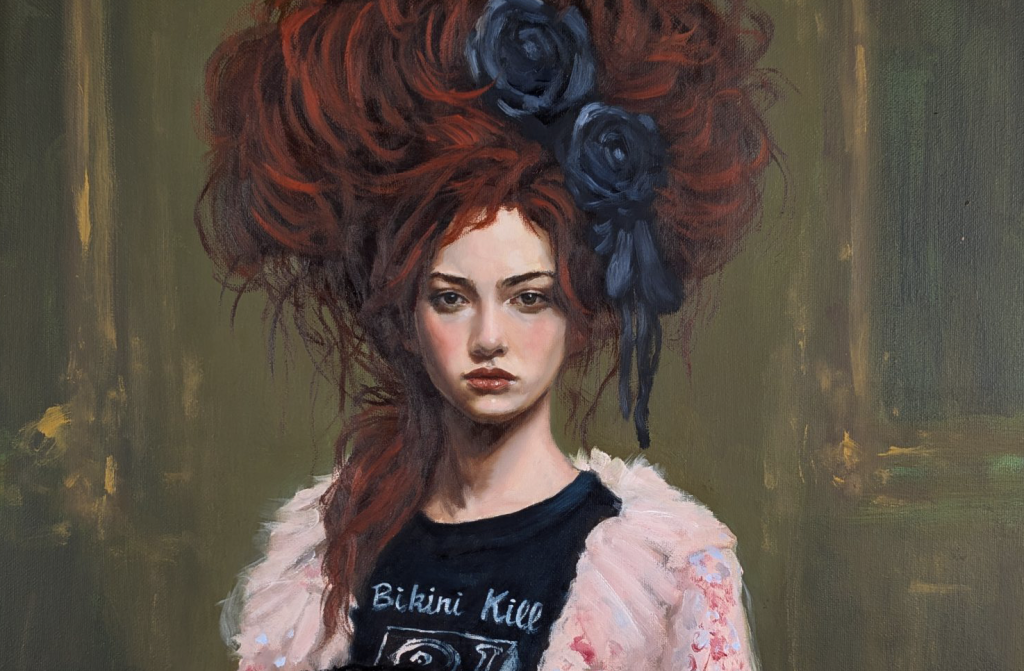
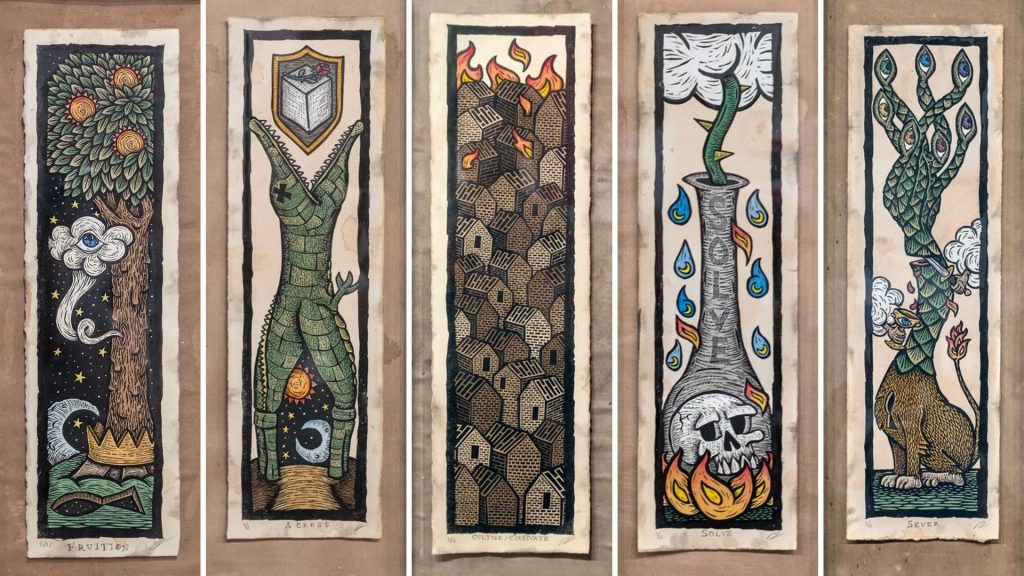
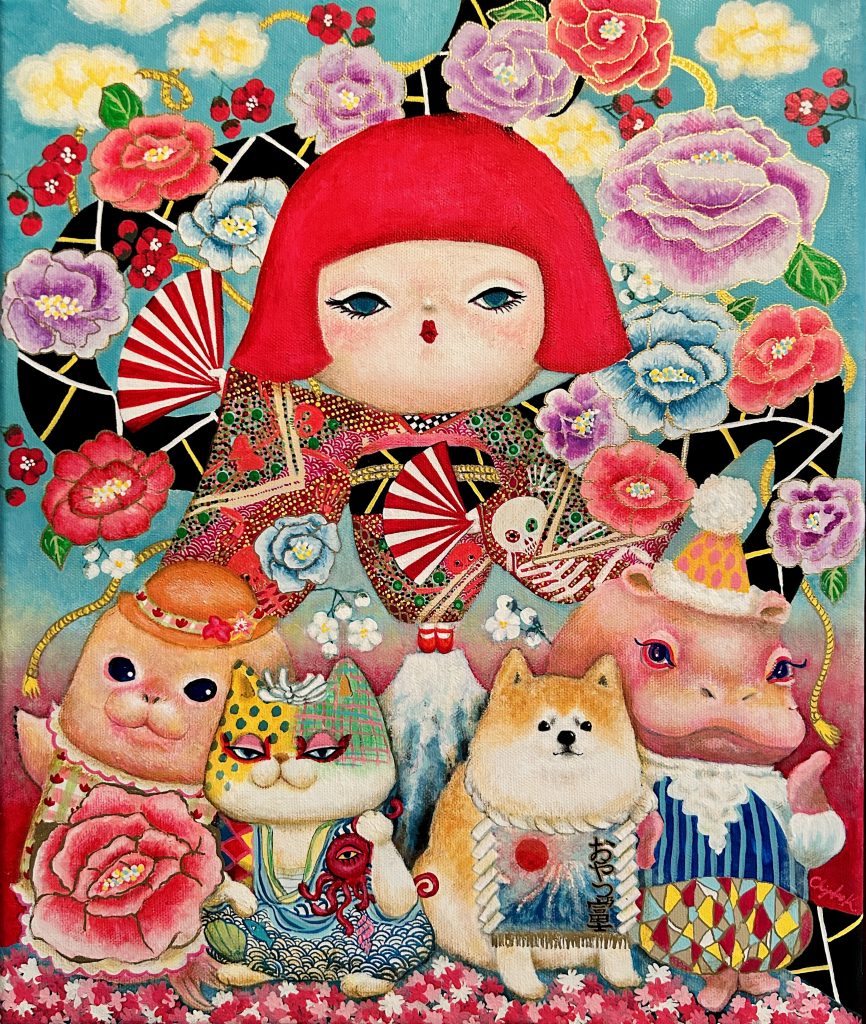
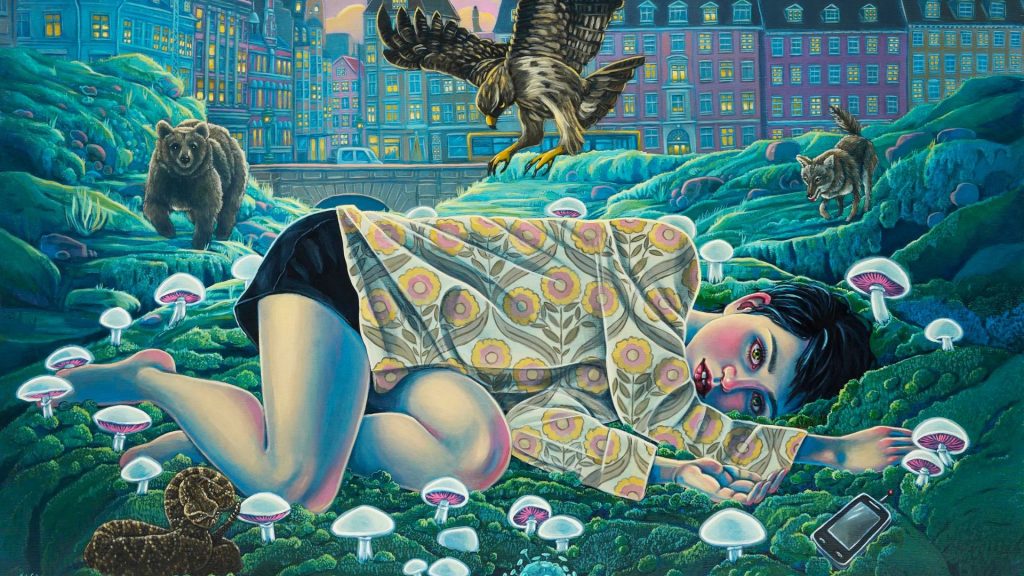
Arwork Featured: Anna Kathleen “Selene”
In a small New Zealand town, surrounded by fields and far from the expected path, Vicki built something remarkable. What began as a quiet rebellion against burnout became Quirky Fox—a unique gallery dedicated to bold, contemporary, and representational art. In this interview, Vicki shares how she stumbled into the art world, what she’s learned along the way, and why she continues to champion artists who challenge the status quo. Her story is one of risk, resilience, and deep creative purpose.
Where Are You From?
New Zealand
Where do you long to live (reality or fantasy)?
A secluded little stone cottage surrounded by fields of wild flowers and woods.

What inspired you to pursue your current profession as a framer and gallery owner?
I fell into working with artists and running a gallery by chance.
I had been working as a librarian when my job underwent some restructuring and I found myself in tears driving to work each day. I accidentally quit one day, not planning to but no longer able to keep pretending everything was ok.
Quirky Fox was my escape.
My parent’s were self employed and encouraged me to start my own business provided I had an exit plan if things weren’t working in 6 months or a year. The business started as a design store with just a handful of artists, however I found picking items from a catalogue incredibly boring.
Between customers I would browse websites like DeviantArt and I found working with artists a lot more interesting than working with reps or a catalogue. I’m incredibly grateful to those first few artists that took a chance on me but also encouraged me to work with more artists and helped me understand how consignment worked.
Over time the business became more and more like an art gallery, although it took me a long time to call it that, even when I was holding regular exhibitions.
In 2019 I trained as a picture framer bringing framing services in-house. Framing allows me to see a lot of artwork I wouldn’t typically see, as well people’s fondest memories. Framing also gave me the freedom and confidence to focus on the type of art I wanted to represent rather than the more traditional type of art seen in many New Zealand galleries.

How has the work you do changed and evolved over the years?
I’ve become a lot more confident in the type of art I want to show and the type of artists I want to work with.
The type of art Quirky Fox presents isn’t your typical New Zealand gallery range. When I first started I thought I had to play it safe and have work that would have a wide appeal – landscapes and native birds, abstracts and popular artists. As my confidence increased, and with the framing my “bread and butter”, I started introducing more and more of the art I would want in my own home and artists I had often admired from afar.
What is the most unexpected/strange/exciting thing to occur over the years in your line of work that you still think about today?
I have made some incredible friends through the gallery that I would never have had the chance to meet, let alone call my friend, otherwise. I’ve learnt so much and think I have become a kinder, more curious person for it.
I’ve been incredibly lucky to have been selected by Beautiful Bizarre Magazine to be a member of their jury for their annual art prize twice.
For someone based in a town of approximately 10,000 people it is all a little insane. Even this interview seems a little surreal – why is someone interested in me???
What advice would you give an artist starting out (young, middle-aged, old – any age) who wants to be a professional artist?
Be curious and keep evolving. The best artists aren’t the ones who think they know everything. The best artists are the ones that are constantly developing their skills and curious about the world around them.
What is the biggest mistake/challenge artists make when trying to become professional working artist? How can they improve and grow?
Becoming a professional artist doesn’t just mean you are good at art, you have to be a good communicator too.
If you want to exhibit your work in galleries or have it showcased in art fairs or art magazines, you need to act professional – respond to emails and messages in an appropriate time frame, treat people with courtesy, maintain deadlines. Treat your art career as you would any other professional career.
- Watch and learn from other artists and galleries.
- Take the time to develop your skills and your portfolio.
- Increase your prices slowly but steadily and listen to galleries advice when starting out.

What do you wish more artists understood about the business side of working with a gallery?
I wish more artists understood how much work happens behind the scenes of a gallery.
Good galleries are actively trying to sell your work, promote you and further your career as an artist. They keep records of which customers might be interested in certain types of artwork, they are watching market trends, trying to display your work in the best possible location within the gallery and among other works. They are promoting you and other artists.
They are trying to learn more about you, your practice and your work so that clients can connect better with the art and the artist. And they are doing this for every artist they represent.
They are organising exhibitions. Working with customers in the gallery as well as through social media and email.
Please support the galleries that showcase your work both online and in person when you can.
And please allow them a little time to reply to your email when they have exhibitions approaching.

What qualities do you look for in an artist when considering representation or exhibition opportunities?
As a gallerist I always consider things such as the style of work and the finishing, but in terms of the artist themselves I look for people that are good communicators and want to treat the relationship between the gallery and themselves as a partnership.

What is your favorite quote?
I have a notebook full of quotes I save for when I need them so my favourite quote varies depending on my mood. One that always sticks with me, and I’m still trying to learn from is “no is a complete sentence”. There’s two quotes from ‘The Boy, the Mole, the Fox and the Horse’ that I love and think more people need to hear: “asking for help isn’t giving up… it’s refusing to give up” and “don’t measure how valuable you are by the way you are treated”.
“asking for help isn’t giving up… it’s refusing to give up”
What are you listening to or reading right now?
I don’t get to read as much as I would like but I’ve just download ‘Grief is the Thing with Feathers’ by Max Porter. I’m hoping for a rainy Sunday to devour it.
What is the one statement you could give to your younger self that you would give anything to go back and relay to them at a pivotal moment?
I would tell my younger self that all the things that make you weird and not quite fit in are the things that make you interesting. They will help you find other interesting people that will love and support you and help you develop a career you love.
This industry thrives on collaboration and support. While it’s both beautiful and challenging for gallerists, curators, and artists alike, having strong allies can make all the difference. Is there someone you’d like to acknowledge for their support and impact on your journey?
There are many people that have helped me develop the gallery, including all the artists that have trusted me to exhibit their work and my family for their support.
One person I would particularly like to acknowledge is Danijela Krha Purssey (Beautiful Bizzare Magazine). Danijela is incredibly passionate and knowledgeable about art, generous with her time, knowledge and support.
Her support, alongside that of my family, is how I kept going through the difficulties of 2023-2024 when landlords let me down and I seriously considered shutting the gallery. She has shown me that even if you live in a small town with relatively conservative art taste, you can showcase the work you are passionate about.
I’m lucky to be in touch with Danijela most days and have witnessed how she supports and encourages so many in the new contemporary and representational art field. She has helped me introduce some amazing artists to the gallery by acting as a reference when asked or suggesting artists that she thinks would fit the gallery or a particular exhibition theme. I’ve been lucky enough to attend an exhibition at NERAM with her and meet some amazing artists and form some wonderful relationships.
I think every gallerist and artist has moments when they doubt their abilities, when sales are slow and your self confidence takes a dive, Danijela has always encouraged and supported me through these moments.

As an art collector, what is the last artwork you purchased?
It is a little embarrassing that it is approaching a year since I last added something to my collection. There have been multiple pieces I’ve wanted but fitting out the new gallery space and buying the building has been my big “art purchase”.
The last piece I purchased was an incredible Sara Baun original. I love Sara’s use of a simple black biro and her attention to detail. There is another piece of hers in the gallery at the moment and I am seriously tempted.
‘It’s Safe To Let Them Fly’ was a piece I immediately felt a connection to; I guess it has become a reminder that it is ok to dream big, as much as it is ok to look after yourself and your heart.

How Quirky Fox Became The Gallery It Is Today
When things got a bit messy in 2012, the owner of Quirky Fox, Vicki, decided to take a risk, quit her job and open her own business.
Sick of seeing the same thing in every shop, Quirky Fox set out to showcase something a bit different. Starting with a mixture of independent artists and commercially produced items, Vicki found working with independent artists more meaningful, rewarding and challenging.
With this in mind, Quirky Fox made the transition from design store to gallery.
Showcasing both established and emerging talents, Quirky Fox invites both New Zealand and international artists to be part of its carefully curated range; all international artists are exclusive to the gallery within New Zealand, while New Zealand artists are exclusive to the gallery within Taranaki.
Quirky Fox aims to provide a home for artists working in new contemporary and representational styles and introduce their works to both a New Zealand and international audience.
In 2019, Quirky Fox started to offer custom framing to complement the gallery. While taking customer preferences into consideration, the gallery aims to frame in a way that moves away from boring, white, decor-friendly frames towards pieces that enhance the artwork and continue to tell the artist’s story.
In late 2024, Quirky Fox purchased a building which it converted into a custom gallery space. The building was renovated over a two-month period, before re-opening in 2025. This space has allowed the gallery to further hone its unique curated style, with a separate gallery for exhibitions.
Each year the gallery donates to an environmental or mental health charity through its anniversary exhibition.
As Quirky Fox continues to evolve and grow, we hope you will join us and our artists on our journey.