Where Are You From?
Youngstown, OH
Where do you long to live (reality or fantasy)?
Small beach town USA.
What started you on your journey into art professionally?
I jumped around a bit. I went to college where I got a bachelor’s degree in fine arts. I focused on printmaking and fell in love with block printing. After school, I didn’t really know what to do so I worked a bunch of random jobs, which ultimately led me to going to mortuary school in Pittsburgh to become a funeral director and embalmer.
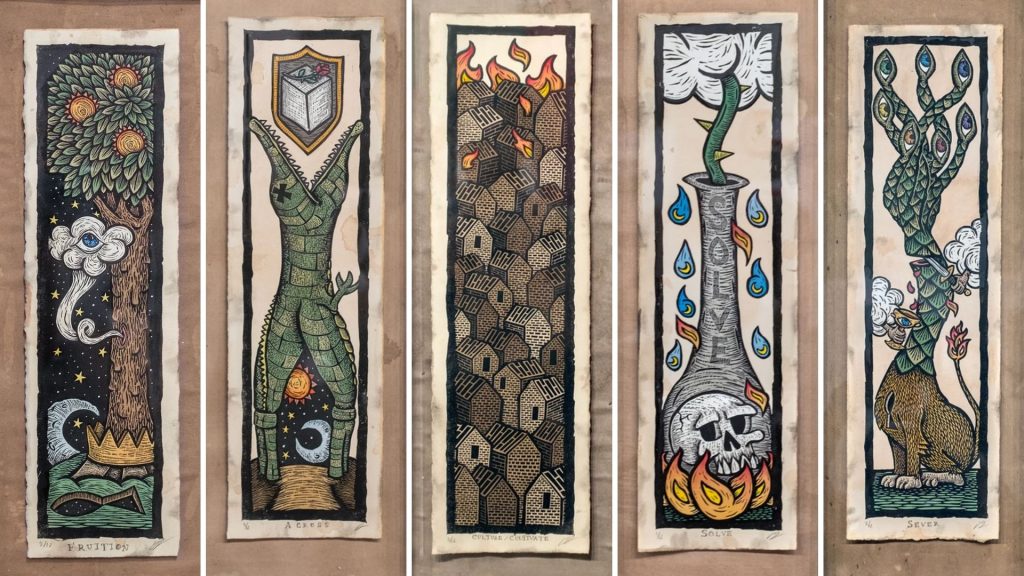
Throughout all of this, I was painting and still trying to figure out what I wanted to do as an artist. One day, I remembered how I loved printmaking and thought maybe painting like my old prints would look cool. That was in 2005 and by 2006 I had my first local show in Pittsburgh with some friends. I’ve been showing in galleries ever since.
How has your art changed and evolved over the years?
I think my work has gotten more refined.
If your artwork could come to life and interact with you, what kind of conversation would you have with it?
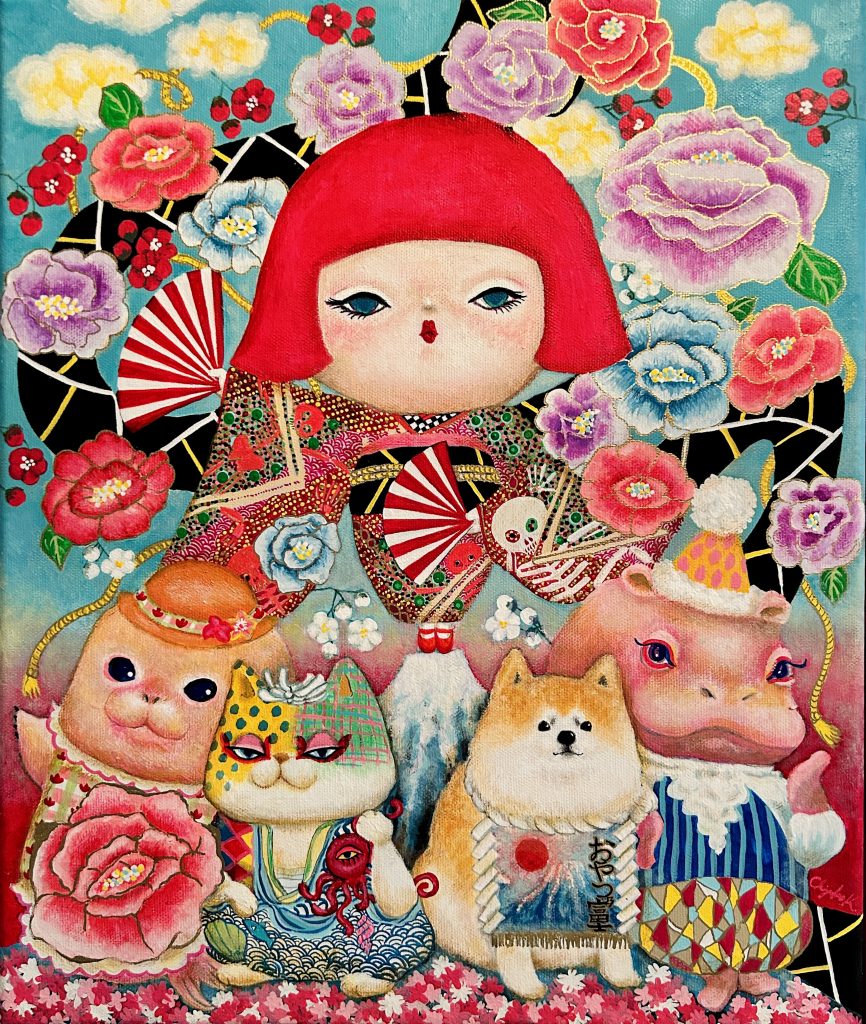
Wow, it sounds like a joke… An artist, a skeleton, a cat and a tiger walk into a bar.
Sometimes I feel like I don’t know why I’m painting what I’m painting, if that makes sense. So I think I’d treat it like a therapy session for myself.
I’d want to know how my characters feel in each of my paintings.
Are they happy?
Sad?
Do they feel any sort of trauma?
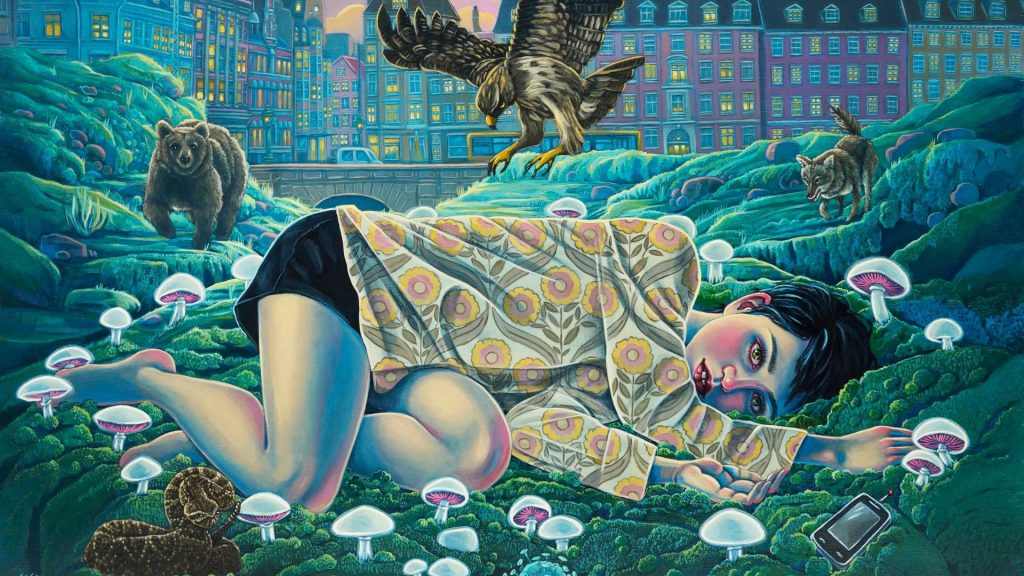
These paintings have a life inside and I may not always know what’s going on. I’m just painting and subconsciously there’s a lot more going on. I’d like to know my paintings better so I could get to know myself better.

What is the one statement you could give to your younger self that you would give anything to go back and relay to them at a pivotal moment?
I have a bad habit of not wanting to disappoint other people, so I tend to say yes to EVERYTHING and that’s just not a good thing, especially when you’re juggling so much and feeling the burn. So my statement would be, “You don’t have to take every single opportunity and it’s ok to say ‘NO’.


In what ways do you think your personal experiences and emotions shape the way you connect with your work?
A lot of my work has been shaped by the ups and downs in life for sure. I see my characters in my artwork as reflections of myself. I’ve gone through nasty breakups, choosing to live a sober life, I found myself in the hospital with some intestinal issues at one point and all of my experiences working in funeral homes, these are all in there in some way or another.
A lot of people view my art as just being about death but it really is a diary about my life.
What is the most unexpected thing to occur with your work through the years that shifted your perspective in a way you never anticipated?
I really think the moment early on when I stopped trying to be so painterly as an artist. I stopped trying to paint like a painter and started to paint like a printmaker.
I loved my woodcut prints that I made in college, they were so bold and graphic with heavy black linework.
One day sitting around in my apartment I thought that making paintings like my prints would be cool. What came of it was a series of 13 paintings. That simple shift has defined my whole career as an artist for the last 19 years. It’s crazy how these things can happen.
Suggested Reading: Why Artists Should Never Stop Evolving (Even When Everyone Tells You To)

Have you ever imagined your art as a time capsule—what do you think future generations would think of it?
I think that future generations will love the idea of the story of how much my artwork was embedded in my life and vice versa. I can sit here now and look at folk art that was made 50 years ago and connect to it because it told the story of the times and what the artist was going through. For me, that’s what matters and that’s why I make what I do.
We have a thing for oversharing...
New artist interviews, articles, books and more!
What advice would you give an artist starting out (young, middle-aged, old – any age) who wants to do it professionally?
I generally tell folks to start out locally, hit your local coffee shops and galleries. Get involved in your local community and meet other artists. I also recommend getting a website; it doesn’t need to be fancy, but you need good pictures of your work and to tell people who you are. And in a world of social media, you can build an audience by sharing your work and telling your story that way.