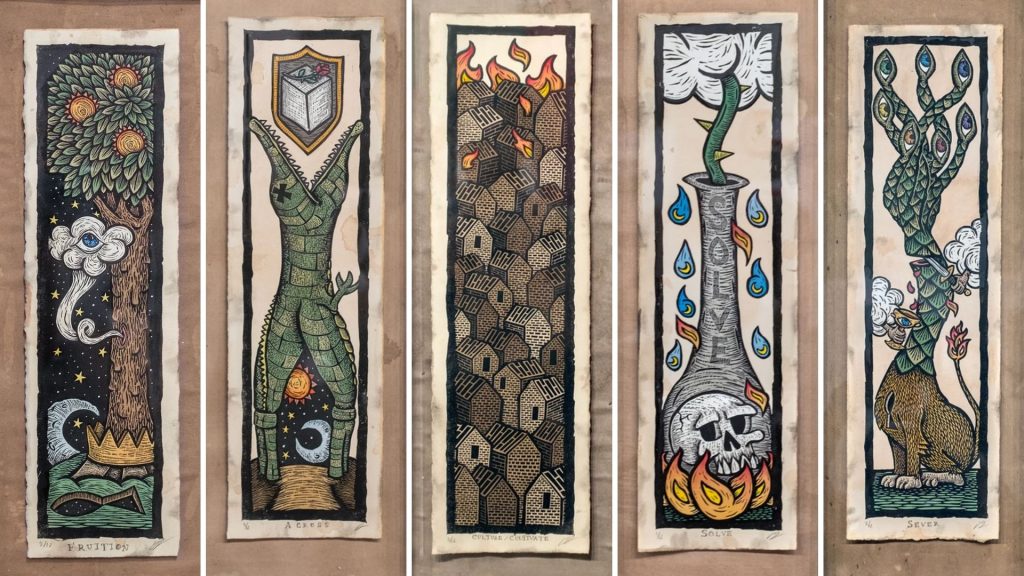
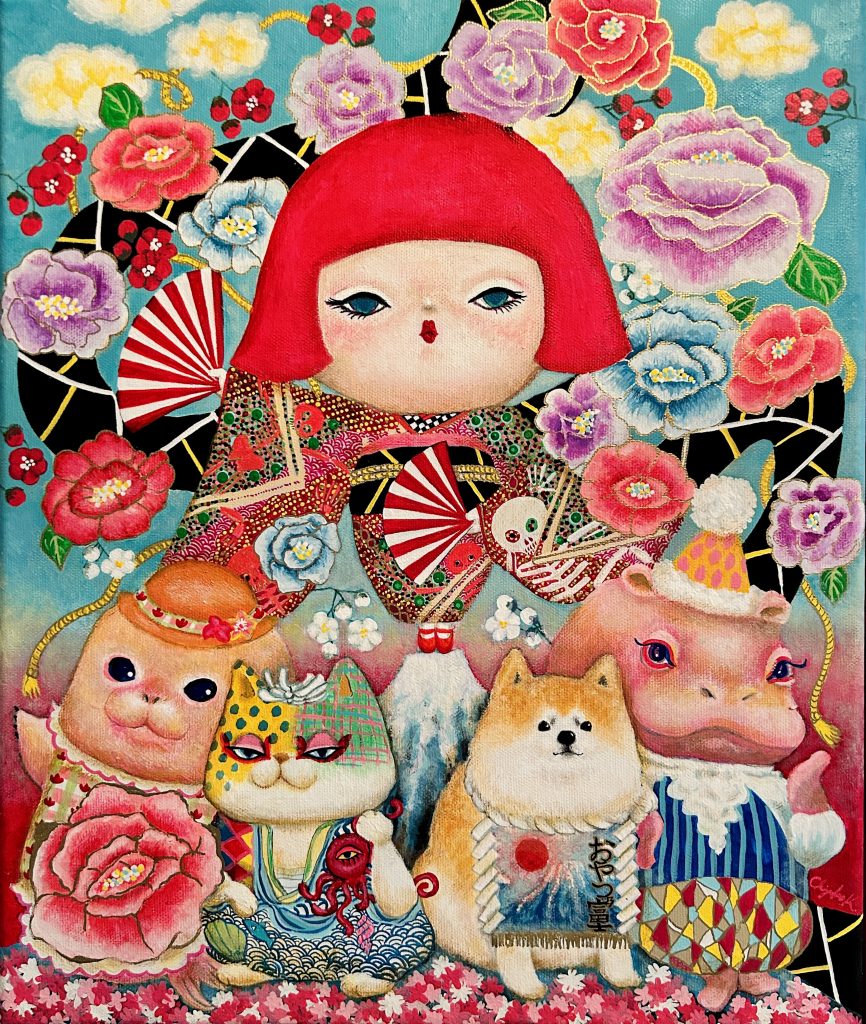
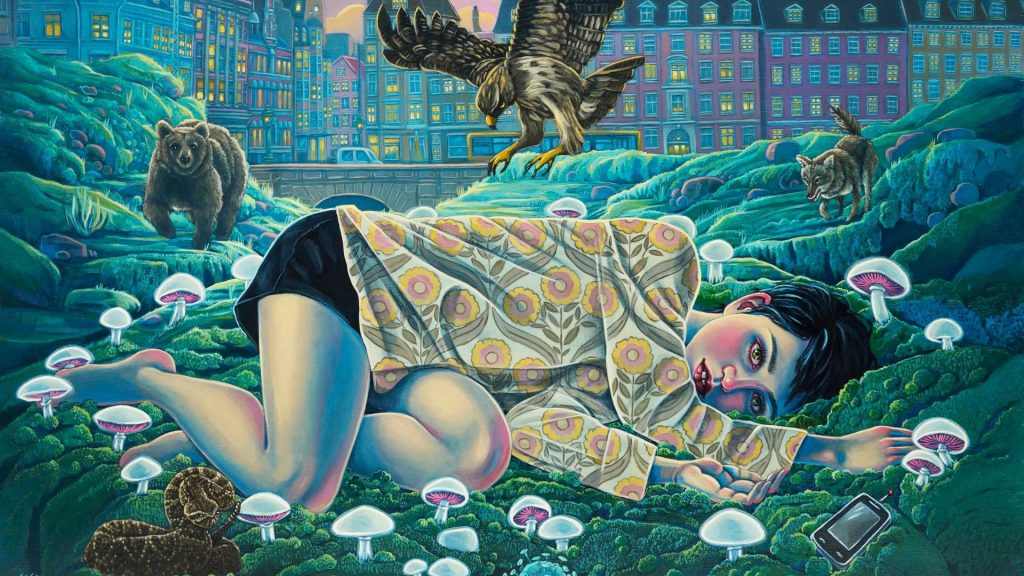
Your paintings feel like they exist in their own world, surrounded by nature, emotional figurative energy, completely unbothered by the outside world. Where does that world live inside you, and how did you first find your way into it?
I’ve always been enamored with animals and the natural world. From a very young age I felt a strong sense of empathy toward other living creatures. As humans we often place ourselves above the rest of the natural world, but I’ve never really experienced it that way.
I believe animals are just as emotionally complex and valuable as we are. They form bonds, experience joy, grief, fear, and relief. When you begin to understand that, it changes the way you move through the world, how you interact with it.
That awareness is really where the inner world of my paintings comes from. I try to create images where humans and animals exist in harmony, where the boundary between them softens. In my work, neither is a guardian of the other. They simply share the same world — two forms of life meeting with equal presence, dignity, and curiosity.
I’m drawn to portraying nature — flora, fauna, and the human figure together — in hopes that viewers might pause and see beyond themselves for a moment. The natural world is full of intelligence, emotion, and beauty, and I think we forget that far too easily.
There’s something deeply intentional about the way you paint women. They make an imprint that they ARE the story. Is that a conscious choice every time you beginning working?
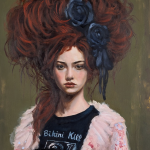
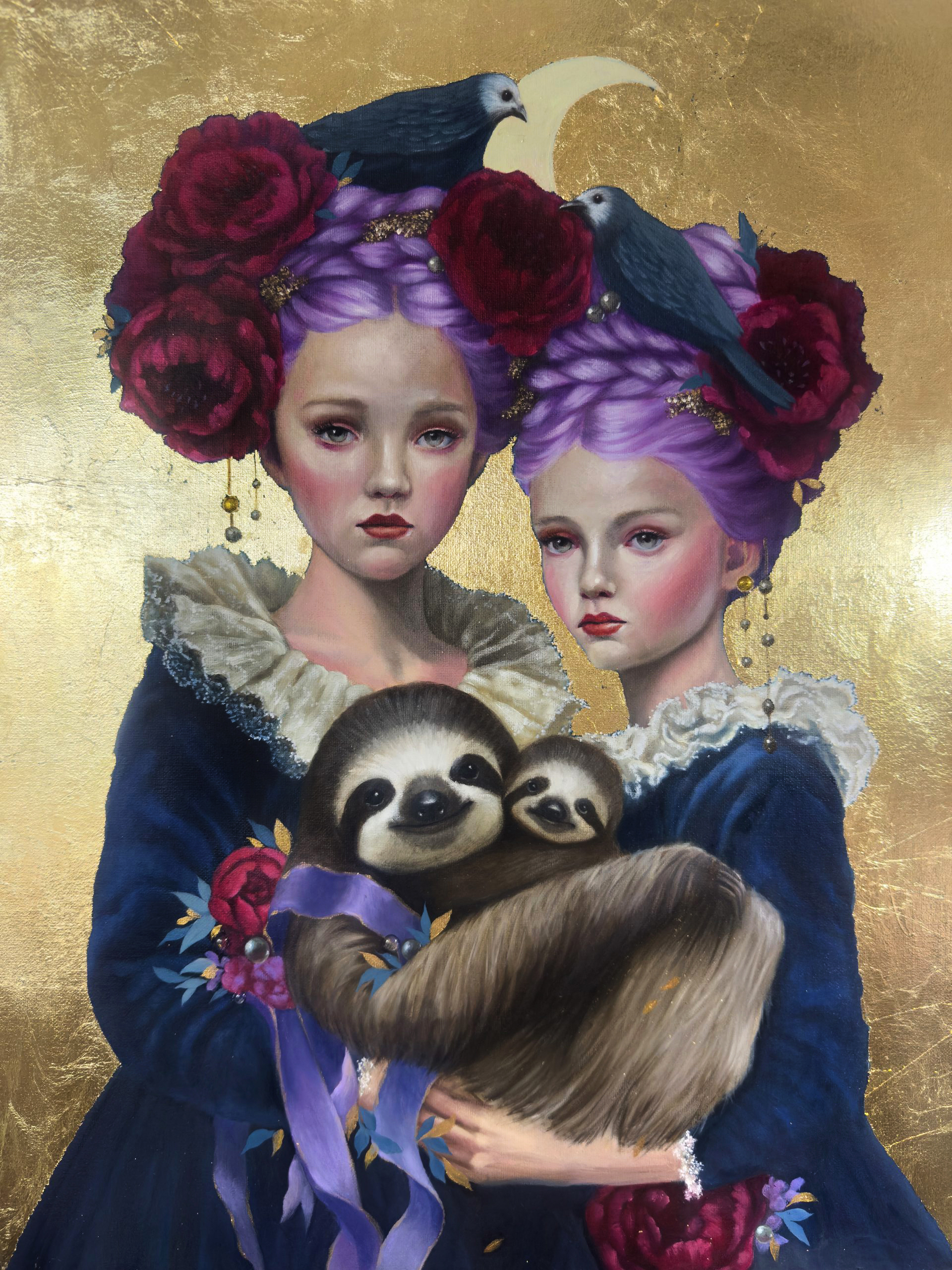
Yes, although at this point it’s become almost instinctual. When I begin a painting, the female figure often becomes the emotional center of the piece. She carries the atmosphere and the quiet gravity of the moment. Over time I’ve realized that part of this comes from the symbolism of motherhood and creation. All life is born from a female, and that idea naturally found its way into my work. The women I paint often feel connected to the idea of Mother Earth — not in a literal sense, but as figures who embody creation, care, and continuity. You’ll often see elaborate hair in my paintings filled with flowers, birds, insects, and other creatures. I think of those elements almost like small ecosystems forming around them. In some ways it’s a visual metaphor — as if life gathers, grows, and finds refuge there when the surrounding world can no longer sustain it. The woman becomes both part of nature and a quiet steward of it. She isn’t dominating the environment around her, but existing within it in a way that allows other forms of life to flourish. So while it may not always begin as a fully conscious decision, that symbolism has become an integral part of how I think about the figures in my work.
You work in both oils and soft pastels which are two very different relationships with a surface. How would you describe the difference in the way each one feels for you, and does the mood you’re in determine which one you reach for?
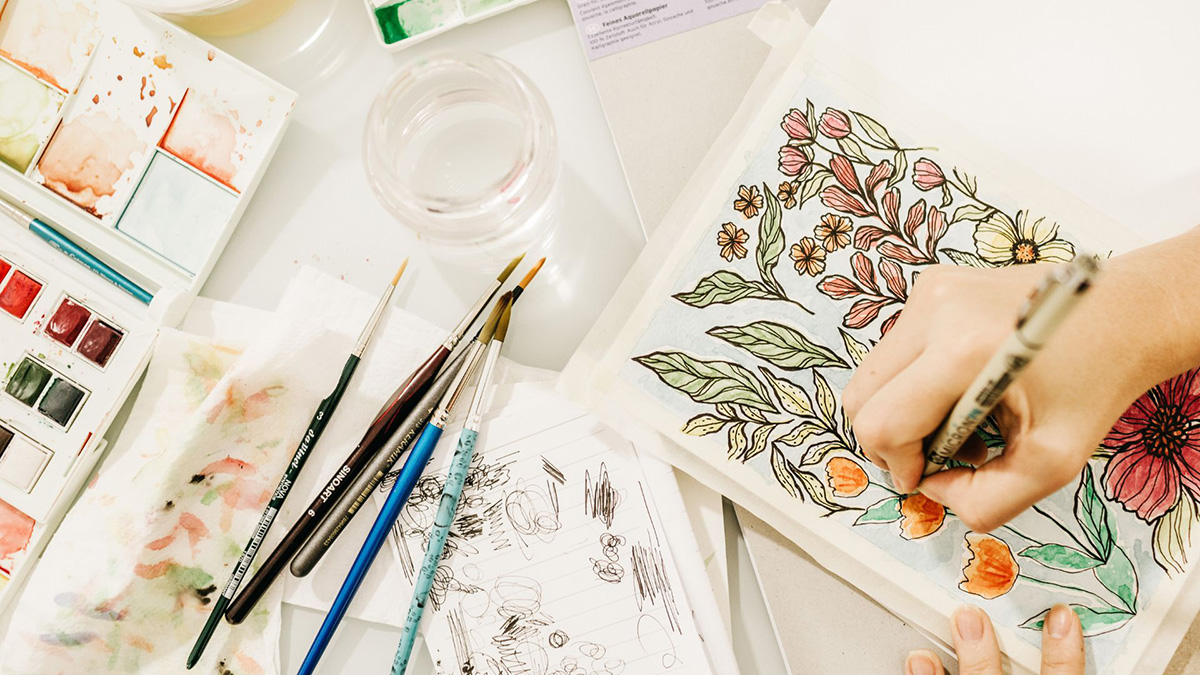
What I love about working in both oil and soft pastel is that they allow my mood to guide the work. When I’m feeling calm and patient, I naturally gravitate toward oil painting. Oils invite a slower, more deliberate process. I spend a lot of time building layers and refining the many small details that gradually bring the image to life. It’s a medium that asks for patience, but it also rewards that patience with incredible depth and luminosity. People are often instantly drawn to oil paintings because of that richness — the sense that the image has been built slowly over time. Soft pastel offers a very different experience. I work on sanded paper, which has a textured surface that grips the pigment. When the pastel moves across that surface it creates a soft, almost whispering sound — there’s a kind of ASMR quality to it that I find incredibly calming. The process becomes very physical and immediate, somewhere between drawing and painting. That sensation alone can bring me back into a focused, grounded state. There’s also a beautiful fragility to pastel. The pigment sits delicately on the surface, so while the act of creating the image feels bold and expressive, the finished piece still carries a sense of delicacy. For me, that balance between power and fragility is part of what makes the medium so compelling. Moving between oil and pastel keeps my studio practice balanced — one asks for patience and layers, while the other invites immediacy, intuition, and a quiet sensory rhythm.
Your work lives in this space between deep stillness and a sense of confidence. When you’re in the middle of a painting, how would you describe the experience of the process for you?
Most paintings I create seem to pass through the “ugly stage.” It’s that point where the image feels completely wrong and nothing is working the way I imagined it would. I usually reach a moment where I’m literally embarrassed because it feels so far from the vision I had in my head. But over the years I’ve learned to trust that stage. It’s almost always the moment right before the painting begins to come together – and then there’s such a relief…’I do know what I’m doing!’ The beginning of a painting is usually my favorite part. It feels a bit like setting the stage — establishing the composition and the atmosphere and sensing what the piece might become. There’s a lot of excitement in those early layers. The middle tends to slow down. That’s where the patience comes in, where I’m refining forms and building the layers that allow the image to take shape. Eventually I fall into a very focused rhythm where the work becomes quiet and methodical. Then the final touches arrive — small adjustments that suddenly allow everything to settle into place. When that happens, the painting finally feels at peace, and that moment is always incredibly satisfying.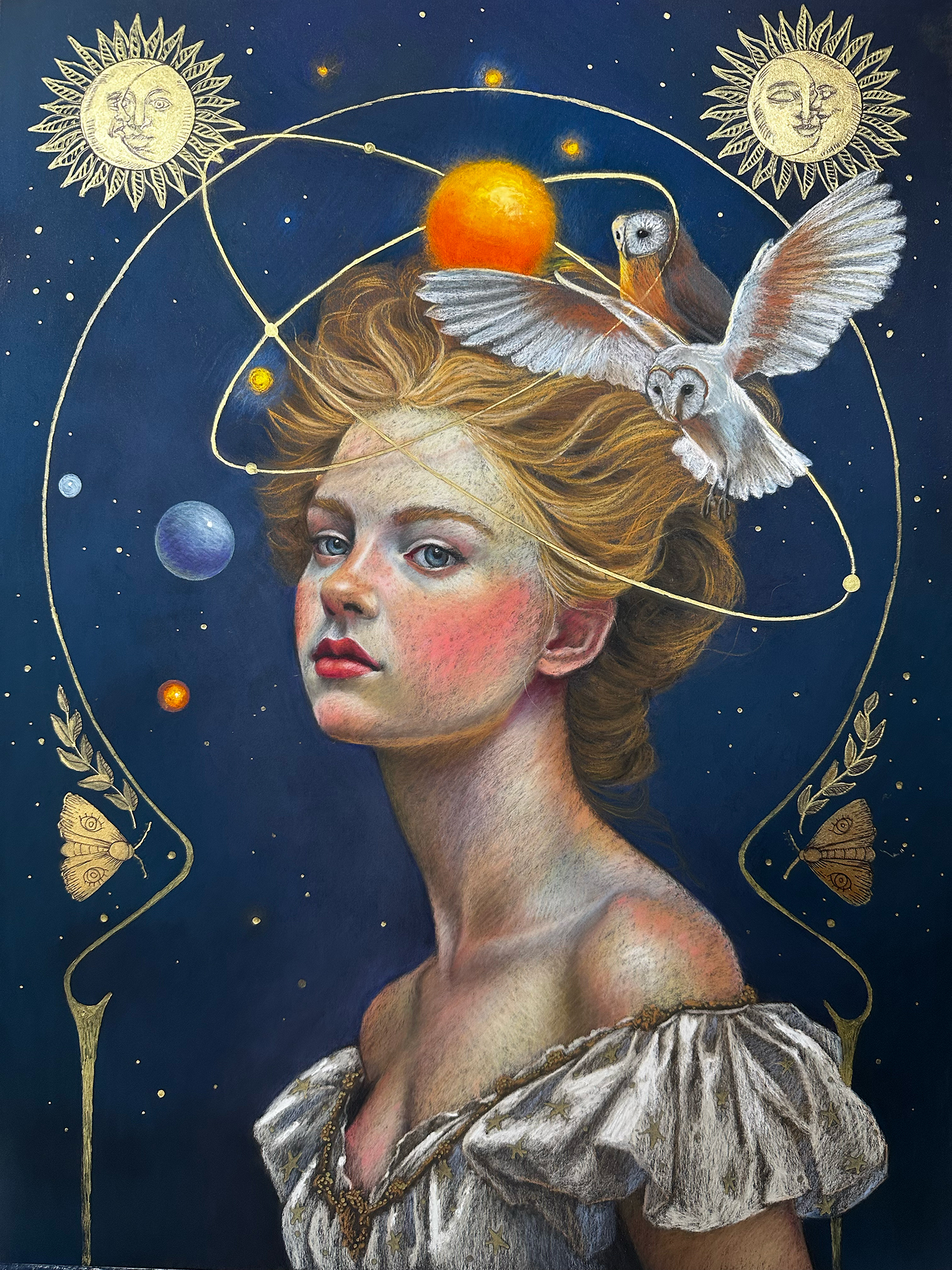
If a person walked into a gallery, saw one of your paintings for the first time, what would you hope that feeling in them was, and what would you want them to carry with them when they left?
I think the first thing I would hope for is a sense of quiet reverence — not only for the painting itself, but for the creatures and living things represented within it. Much of my work is rooted in the idea that all life carries value and presence. The animals, insects, and plants that appear in my paintings are not decorative elements to me. They’re part of a larger conversation about the natural world and our relationship to it. If someone pauses in front of the work and begins to feel that connection, even briefly, then I feel like I’ve succeeded. Ultimately, I hope they leave with a feeling of appreciation — for the beauty of the natural world, for the emotional presence of the creatures around us, and perhaps even for the act of making something with deep attention and passion. I truly love what I do, and I hope that energy is something people can feel when they stand in front of the work.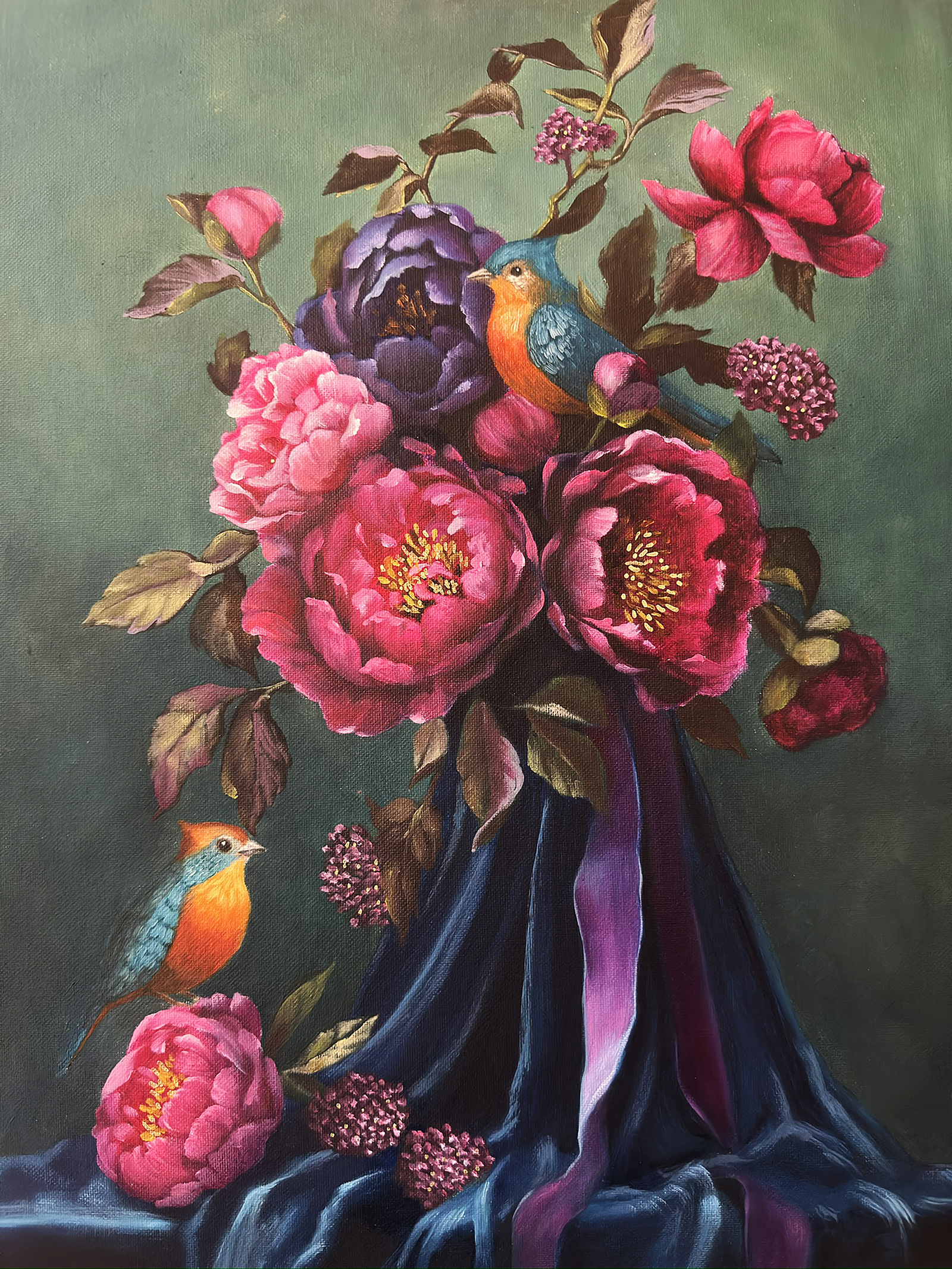
What are the mediums that you love to use the most and why? Any favorite brands or tools?
My first love is oil painting. It’s the medium I studied in college, and even after all these years I still feel like there’s more to learn from it. Oil has an incredible depth and richness, and I love the slow, contemplative nature of the process. There have been moments in my life when I stepped away from it for practical reasons — when my son was little, for instance, I wanted to be cautious about materials and I didn’t always have the space for paintings to sit out drying with toddlers and curious pets running around. But no matter how many times I pause, I always seem to find my way back to oil. For oils, I especially love working with Sennelier, Charvin, and Michael Harding paints on canvas. Each has its own character — the pigment quality, texture, and luminosity are just beautiful to work with. My second great love is soft pastel, which actually grew out of my experience as a street painter. The first time I created large-scale work on asphalt with soft pastels, I fell completely in love with the medium. But street painting is inherently ephemeral — the artwork only lives for as long as the event lasts. I remember one festival where I was rushing to finish a piece for the final photograph as a street sweeper slowly approached, the water creeping closer and closer to the drawing. Moments like that made me realize how fleeting those works were, and it inspired me to begin creating pastel pieces on paper that could live beyond the street. That decision turned into a true love affair with soft pastel. In my studio practice, the two mediums complement each other beautifully. I’ll often start several oil paintings and then set them aside to dry while I work on pastel pieces in between. The rhythm of moving back and forth between them keeps my creative energy flowing. For pastels, I love working on UArt 600 sanded paper and often use Stabilo CarbOthello pastel pencils along with NuPastel, Rembrandt, and Sennelier soft pastels, which allow me to build rich layers and subtle color shifts. For me, the combination of oil and pastel feels like the best of both worlds.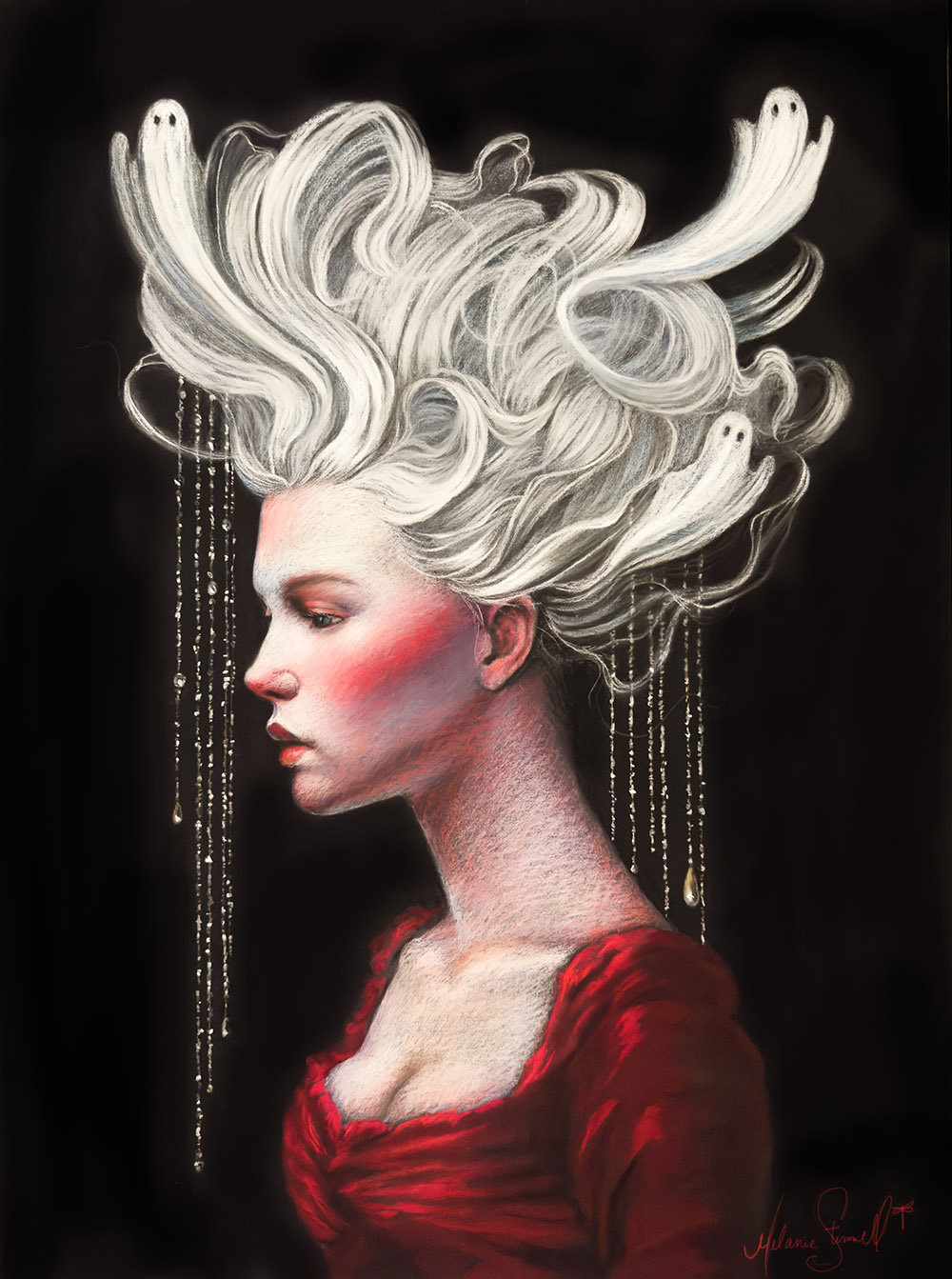
We have a thing for oversharing...
New artist interviews, articles, books and more!