Former film prop maker Merlijn van de Sande now builds intricate miniature environments from glass, wood, and found materials, each one a window into a dreamlike place that feels both otherworldly and strangely familiar.
In this interview, she shares how architecture and nature meet in his work, how she turns inner emotional states into physical spaces, and her advice for artists ready to go professional.
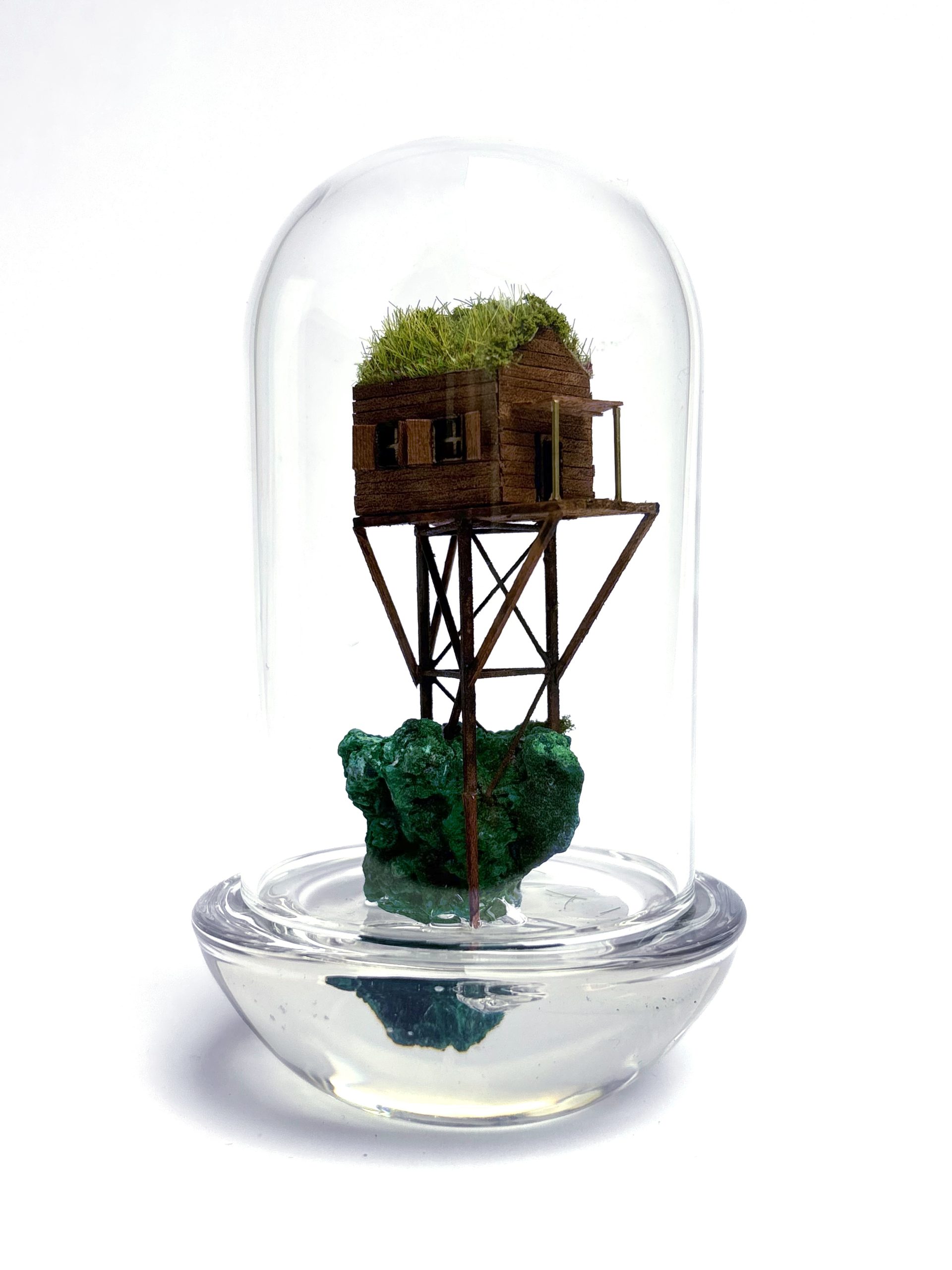
Your work takes the form of small, constructed environments like dioramas into another realm of world building. What draws you to building worlds physically rather than depicting them in a flat image?
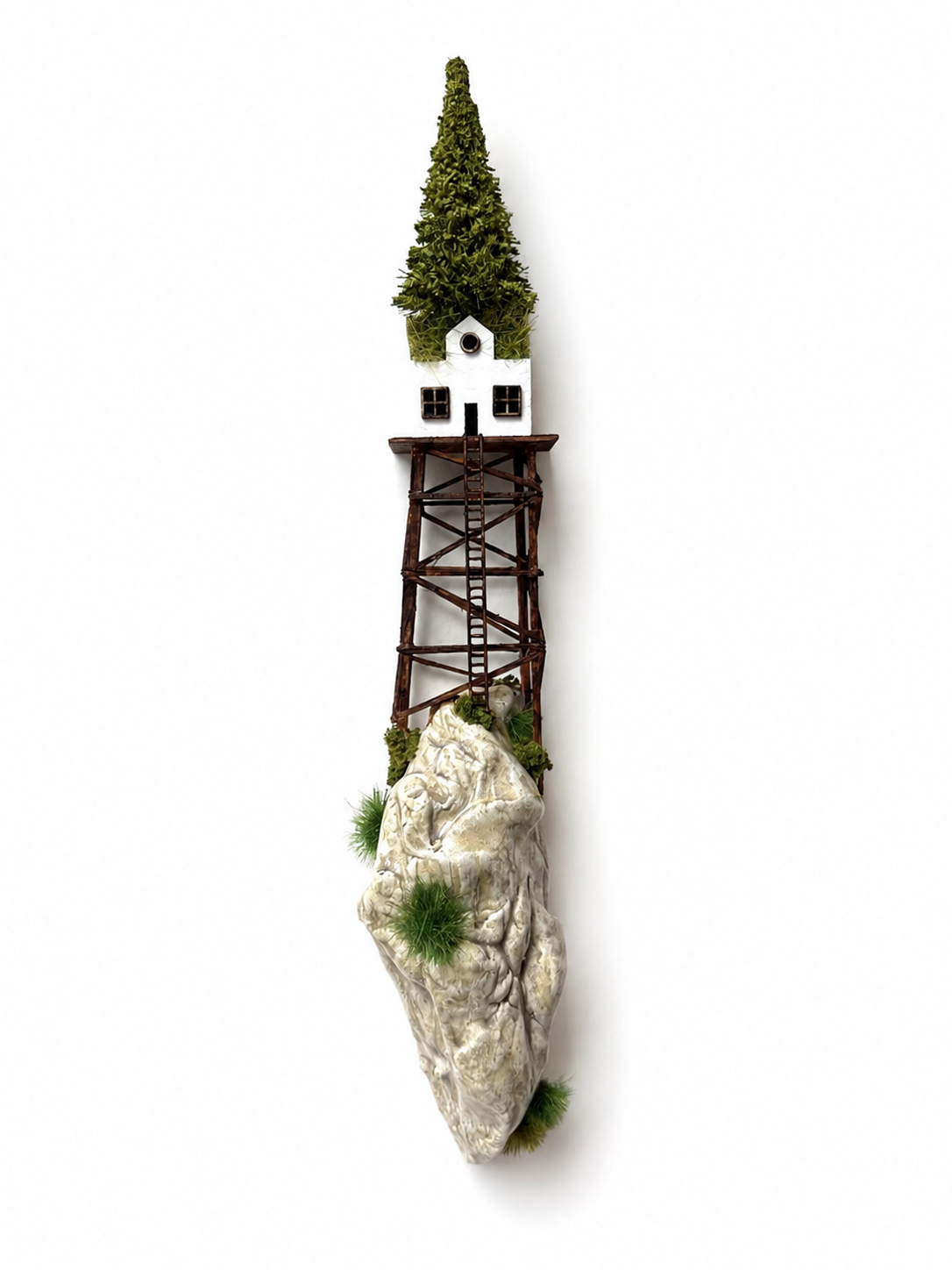
I come from the film world; I studied production design, where you learn how to shape a film visually. The Dutch film industry mainly produces realistic drama, which didn’t give me enough room to fully express myself. Beyond designing, I wanted to create with my hands. I became a special prop maker for film, which opened opportunities to work on more surreal and fantastical stories, including international projects. One day I was asked to create a miniature prop, which inspired me to start building entire miniature worlds so I wouldn’t need a large art department to realize them. Initially, I photographed these miniatures, creating two-dimensional work. But I discovered that sculpting gave me more satisfaction, I could focus on intricate details and for me, a three-dimensional work still feels somehow more tangible, more present in the three-dimensional world we live in.
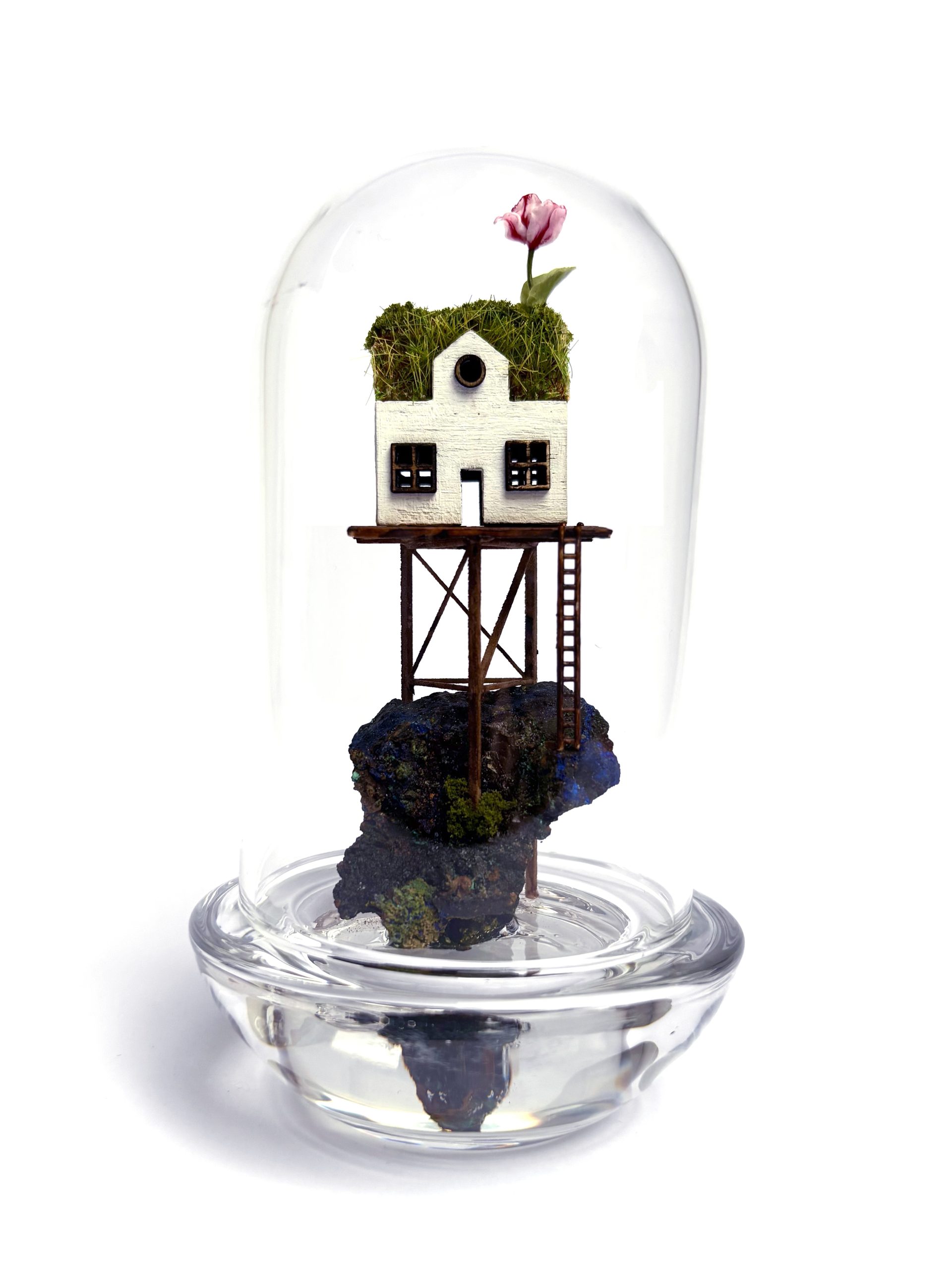
Your work combines materials like glass, wood, and found elements in ways that seem otherworldly yet familiar. Is this an intentional part of creating or has this emerged through time intuitively in some way?
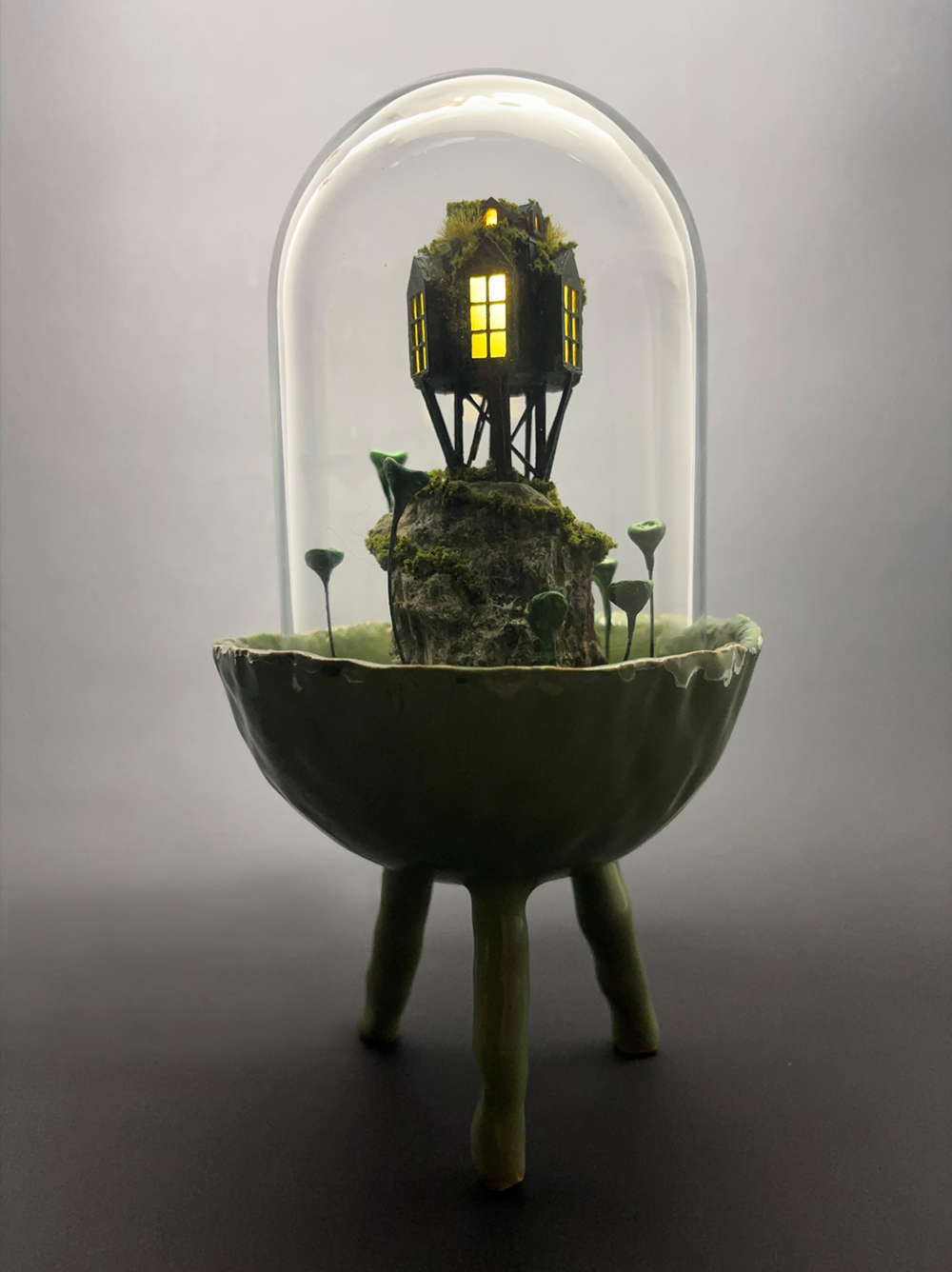
I think it’s important that my work contains recognizable elements, so it evokes a sense of familiarity or memory for the viewer. These familiar elements act as an entry point, inviting viewers to engage more deeply with the associations and emotions the work elicits.
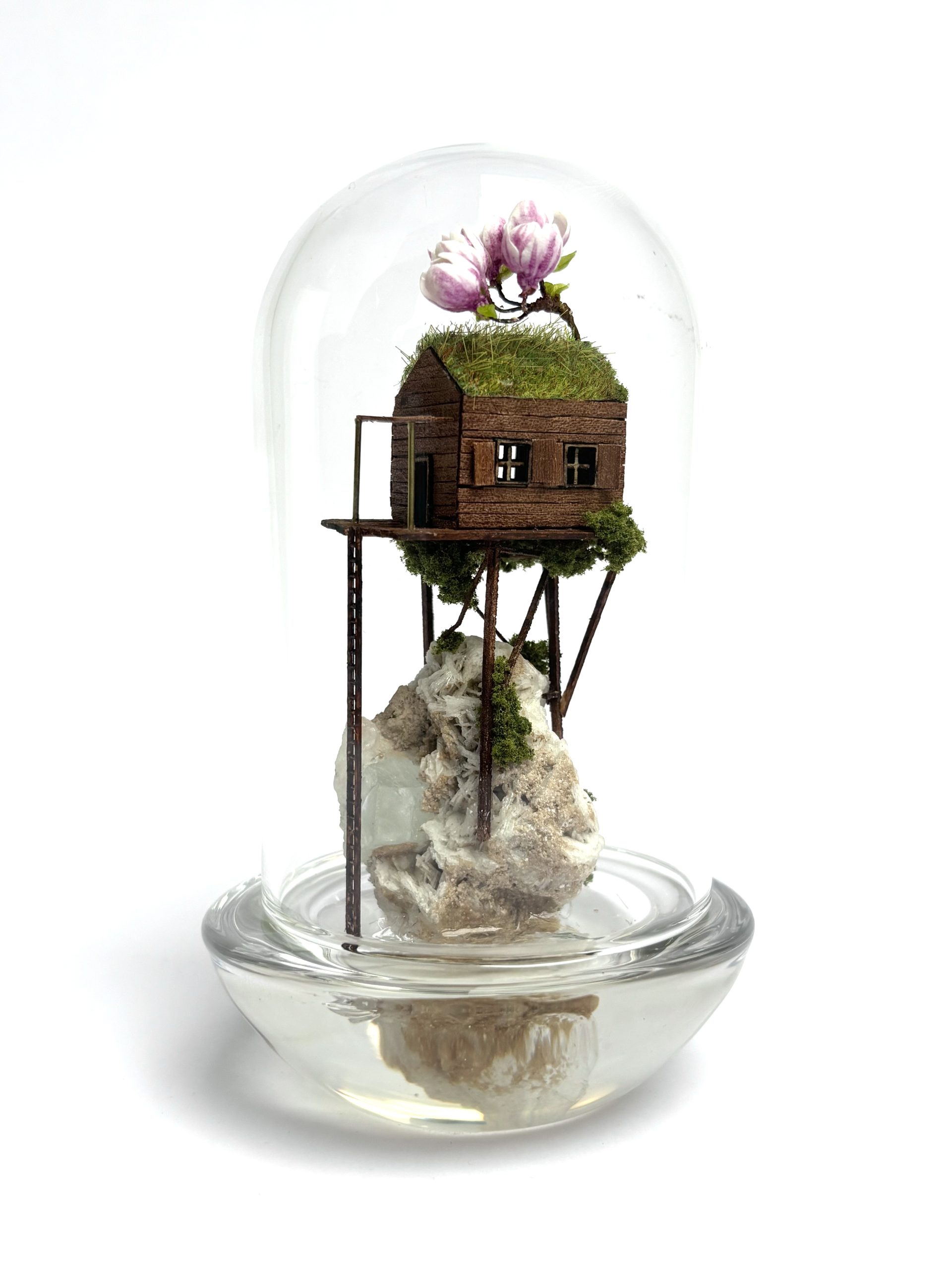
Is there a symbolic sense to the balance in your work between architectural structure and natural elements that speaks to you in a way you could personally describe to others?
I enjoy working with natural materials and forms, as determined by the natural order. Architecture, on the other hand, is often more graphic and associated with human creation. The contrast between the natural and the constructed already tells a story about the world we inhabit and human perception. Yet both creations belong to the same universe, so although they appear different, ultimately everything is interconnected.
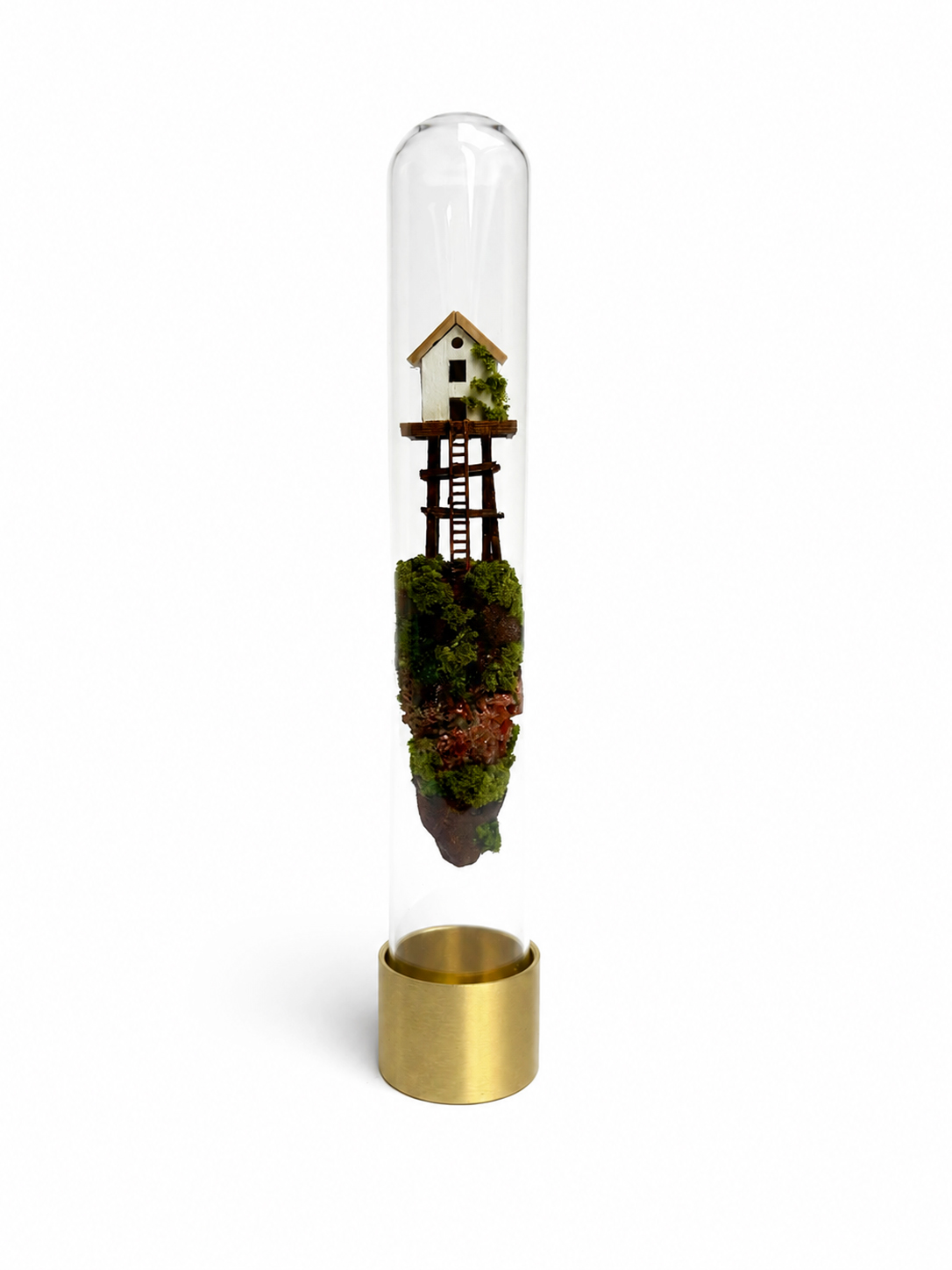
How would you describe your works to a room of people that are only very young children and elderly in a way that they may all understand?
I make miniature sculptures from a variety of materials, inspired by architecture, nature, and a touch of imagination. My work is like a window into another world, a dreamlike place, a memory from the past, or a special place you might have visited. It reflects our inner world, the things we feel and experience inside. My work often evokes wonder and a bit of magic, while also creating a sense of safety and comfort.
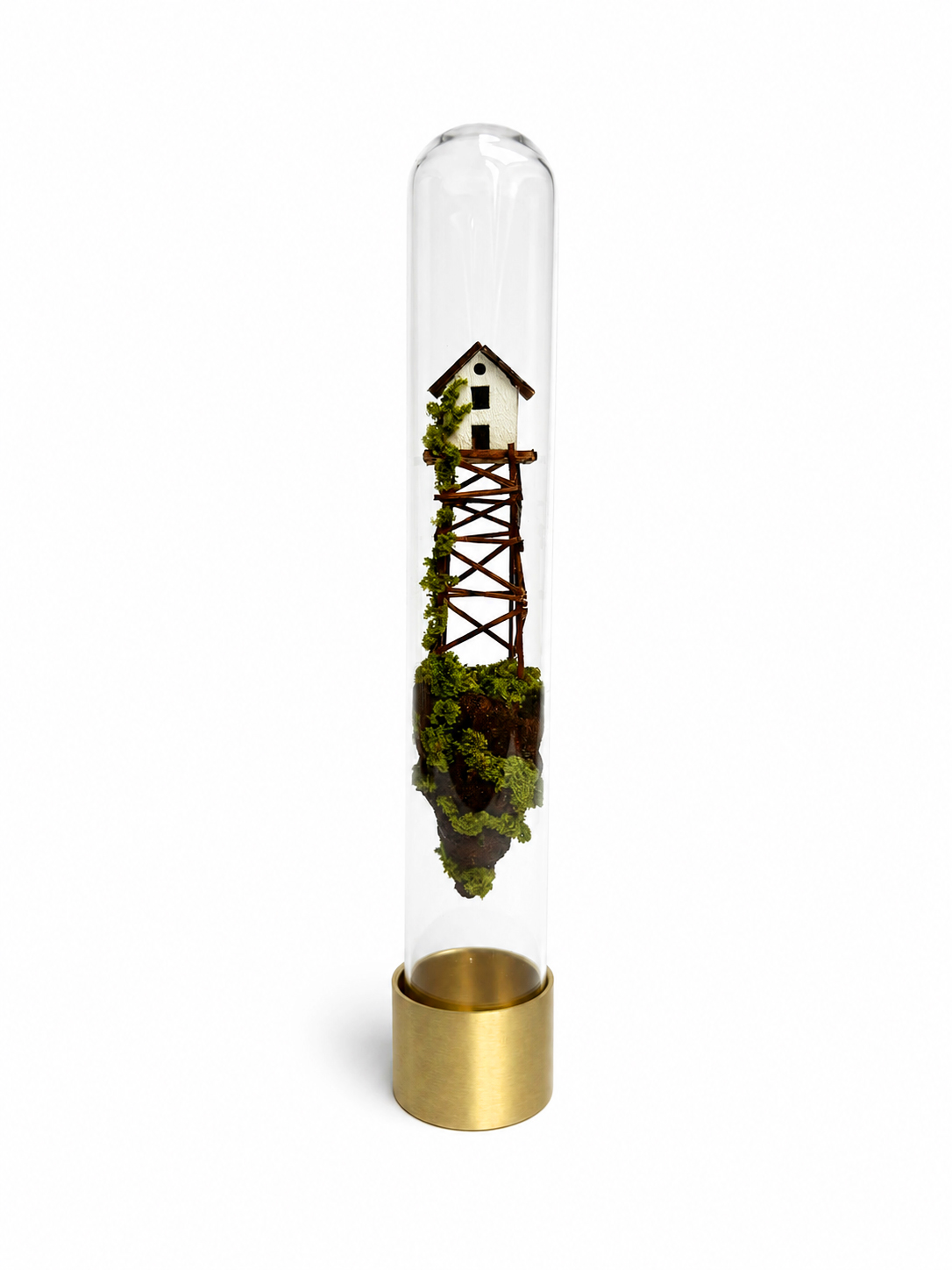
Many of your pieces explore inner growth and emotional states, such as in works that reflect personal development. How do you translate something internal into a physical space or object?
I don’t follow a strict technique; it happens naturally as long as I remain open. I reflect a lot on my own processes and listen to podcasts about other people’s life experiences. Colors, shapes, and materials guide the inspiration, letting the work unfold the story I wish it to tell. I rarely sketch beforehand; I prefer to let the piece emerge as I build it with the materials I’ve gathered.
We have a thing for oversharing...
New artist interviews, articles, books and more!
What advice would you give an artist starting out (at any age) who wants to do it professionally?
I would advise a beginning artist to first explore what they truly want to create, what excites you, which mediums feel natural, and what story you want to tell. Once you have a sense of direction, start building your professional foundation: create a strong online portfolio, share high-quality images on Instagram and your website, and develop a strategy for how you want to present your work to the world. Will it be through exhibitions, galleries, or an online shop? Take action to make your work visible, even if it feels uncomfortable at first. Participate in open calls, submit to exhibitions, sell work online, find what resonates with you. Invest time in networking, and connecting with your audience. Growth takes time, so trust the process and remain consistent in both your art and your business. Collaborating and exchanging ideas with other artists can also be incredibly inspiring and helps you take continual steps forward.

Deborah Jackson, Gallery Assistant
Deborah Jackson is the Gallery Assistant for Poetic Tiger. She is also an artist and writer who creates big-eyed characters with soft, brave, gentle hearts. Living now on a wild and windswept island in Scotland, her work is for those who feel the deep pull of small magic and look to immerse themselves in stories filled with curiosity and courage.