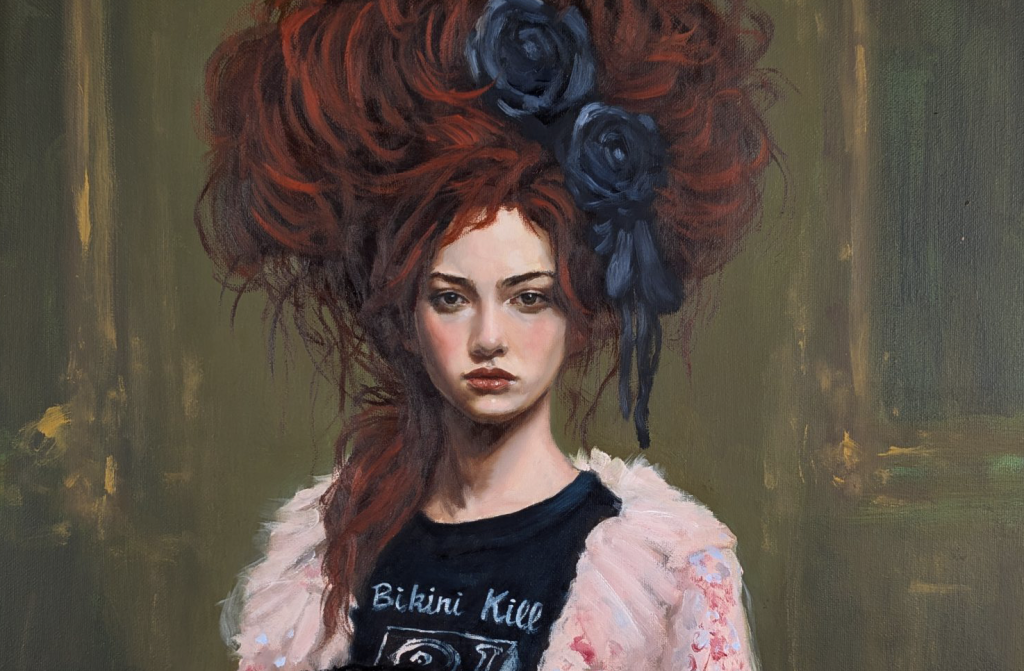
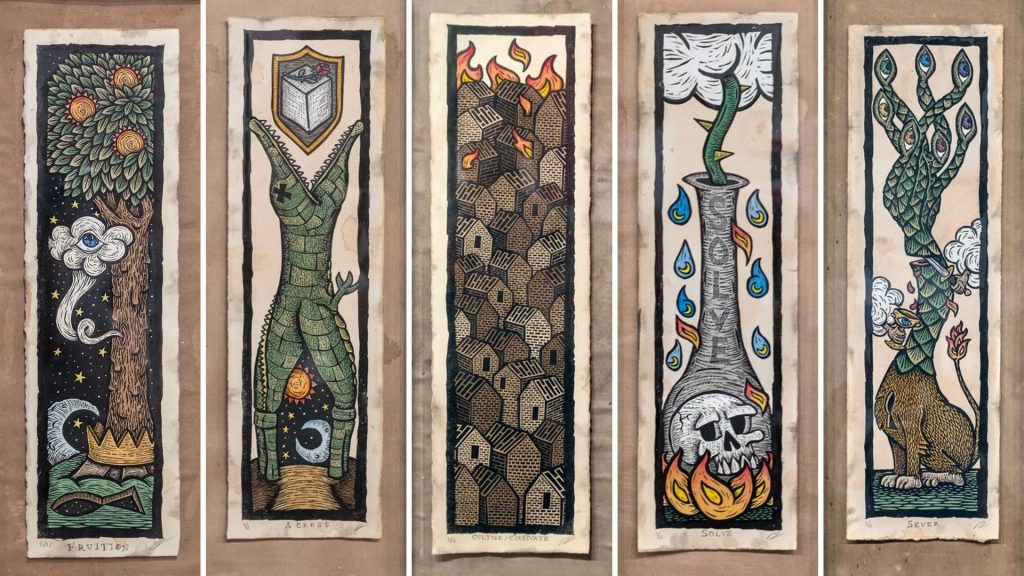
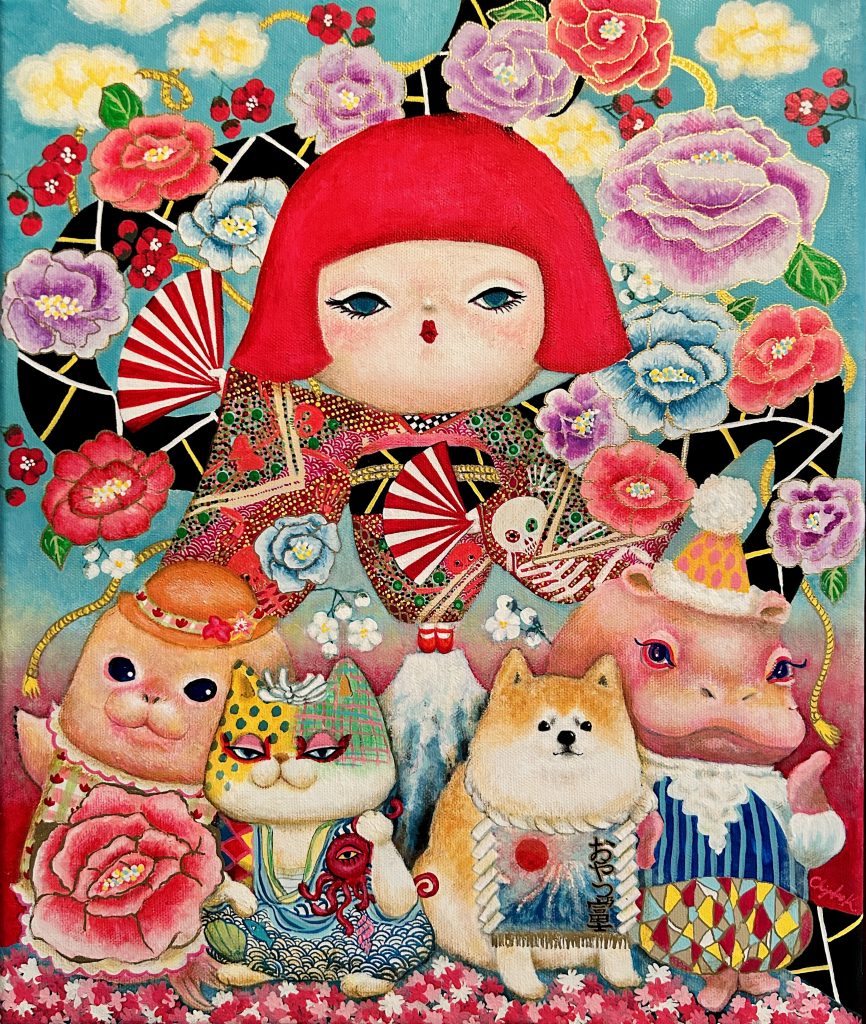
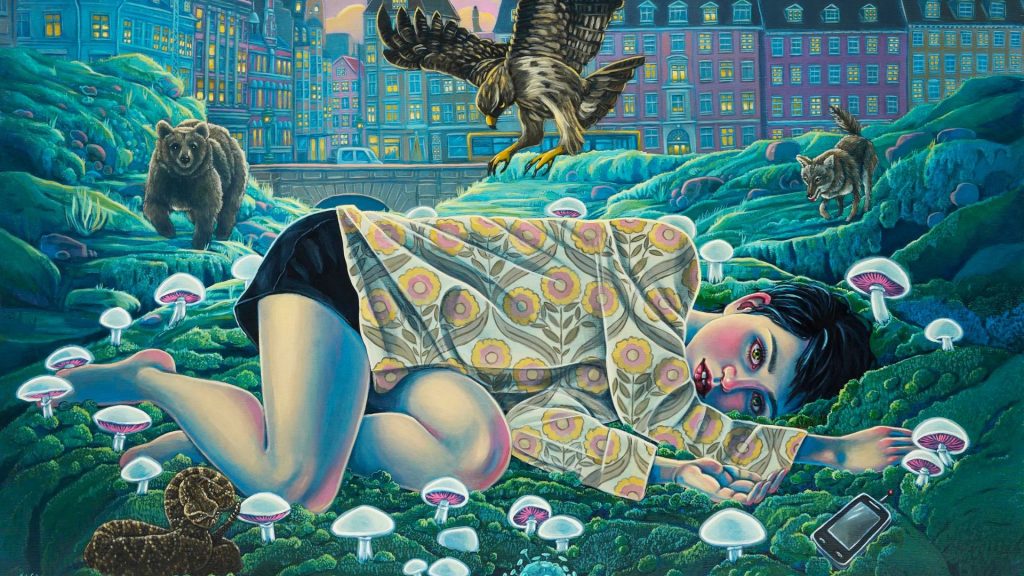
Born in China and now based in Paris, Dongni Hou creates intimate paintings that explore the quiet depths of human experience. Working in tempera with antique frames, her art has evolved from narrative compositions to distilled meditations on solitude and resilience.
For Hou, art was never a choice but a necessity—her way of translating the invisible into form. Through personal loss and creative growth, she has learned to “say less and feel more,” creating contemplative spaces where silence holds as much meaning as what is seen.
Where Are You From?
China
Where do you long to live (reality or fantasy)?
Currently live in Paris.
What started you on your journey into art professionally?
Art was never a decision — it was a necessity. From as early as I can remember, it was how I made sense of the world and of myself.
I didn’t choose this path; it revealed itself, quietly but persistently. Over time, it became clear that painting wasn’t just something I did — it was how I listened, how I spoke, how I existed.
To pursue it professionally was simply to align my outer life with an inner truth I had always known.

In what ways do you think your personal experiences and emotions shape the way you connect with your work?
My personal experiences don’t just shape my work — they breath through it. Emotion is the thread that draws me toward the image, quietly and insistently.
My work is shaped by everything that has forged me — gently or profoundly. It becomes a way of translating the invisible, giving form to the inner world so it can be seen, felt, and shared.
Through that, I hope to connect with others who carry the same sensibility — and the same quiet perseverance.
In that sense, painting becomes both mirror and companion. It helps me hold what I live, and live what I hold.

What is the one statement you could give to your younger self that you would give anything to go back and relay to them at a pivotal moment?
Where there is a will there’s a way.
How has your art changed and evolved over the years?
My work has shifted inward over the years — from constructing narratives to quietly uncovering them.
What once centered on form, allegory, and outward symbolism has become more distilled, more essential. I now search for what lies beneath: the emotional weight of stillness, the quiet battle within.
The compositions have simplified, but the tension has deepened. I focus on subtle contrasts — fragility and strength, solitude and resilience. Through tempera and antique frames, I try to evoke something tactile, lived, almost whispered.
At its core, my work is a meditation on the human condition — on the unspoken struggles we carry, and the silence that holds them.
Over time, I’ve learned to say less, and feel more. To let the image speak for itself — gently, truthfully.

If your artwork could come to life and interact with you, what kind of conversation would you have with it? For me, the artwork already comes to life — every time. It’s the most constant conversation I have.
It feels like speaking with a part of myself that exists outside of time — older, quieter, perhaps even wiser. My paintings don’t respond with answers, but they hold space. They witness.
The exchange is never loud. It’s a breath, a pause, a mirror — and in that stillness, I begin to understand what I was truly trying to say.

What is the most unexpected thing to occur with your work through the years that shifted your perspective in a way you never anticipated?
The deepest shift in my work came through loss — the passing of the ones I loved.
That grief changed the way I see everything. It stripped life bare, revealed its fragility, its impermanence. But it also uncovered something enduring — a kind of love and presence that doesn’t vanish, even when the body is gone.
I no longer try to hold onto things, but to honor them. To let the image carry what words cannot: the ache of absence, the beauty of memory, the way something can disappear and still remain.
Have you ever imagined your art as a time capsule—what do you think future generations would think of it?
If future generations were to look at my work, I hope they would feel something deeply human — something that transcends language, era, or place.
Perhaps they would sense that beneath all the noise of their time, someone once tried to speak softly, and truthfully. To reveal what it means to feel, to long, to endure — to simply be.
A search for the essential. A distilled expression of what remains when everything else falls away.
And maybe, in that quiet reflection, they would recognize something of themselves — just as I have tried to recognize myself.

What advice would you give an artist starting out (young, middle-aged, old – any age) who wants to do it professionally?
Protect your inner world — it’s where everything begins.
The path isn’t linear — it deepens.