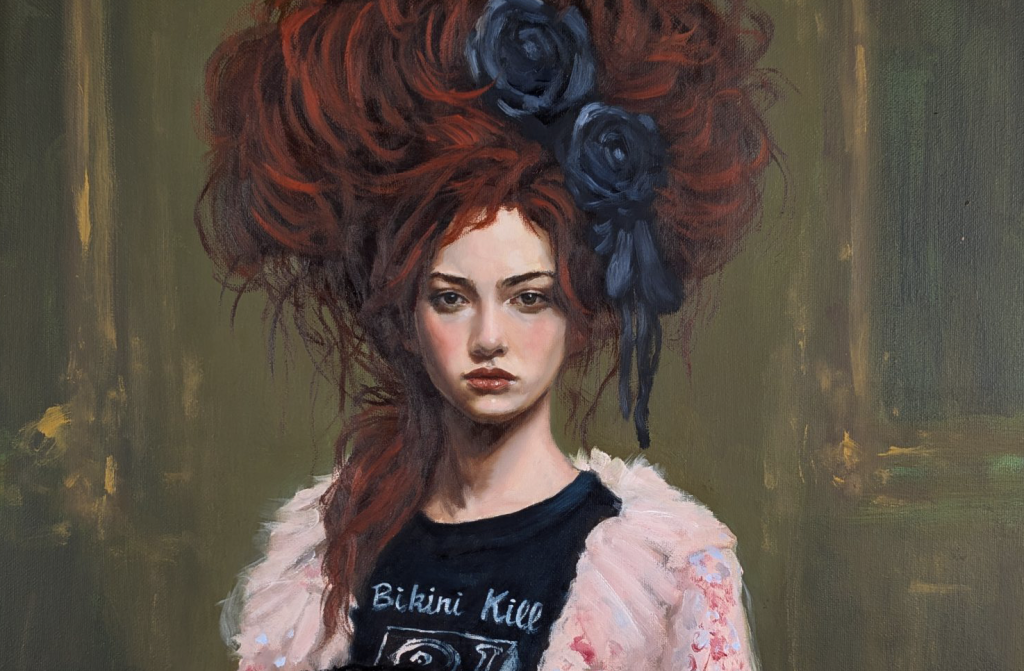
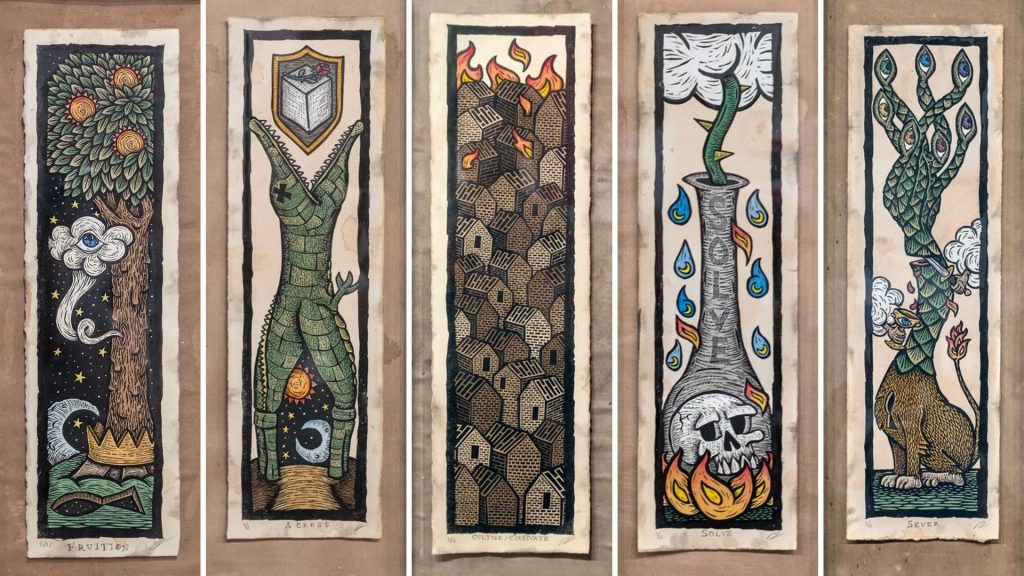
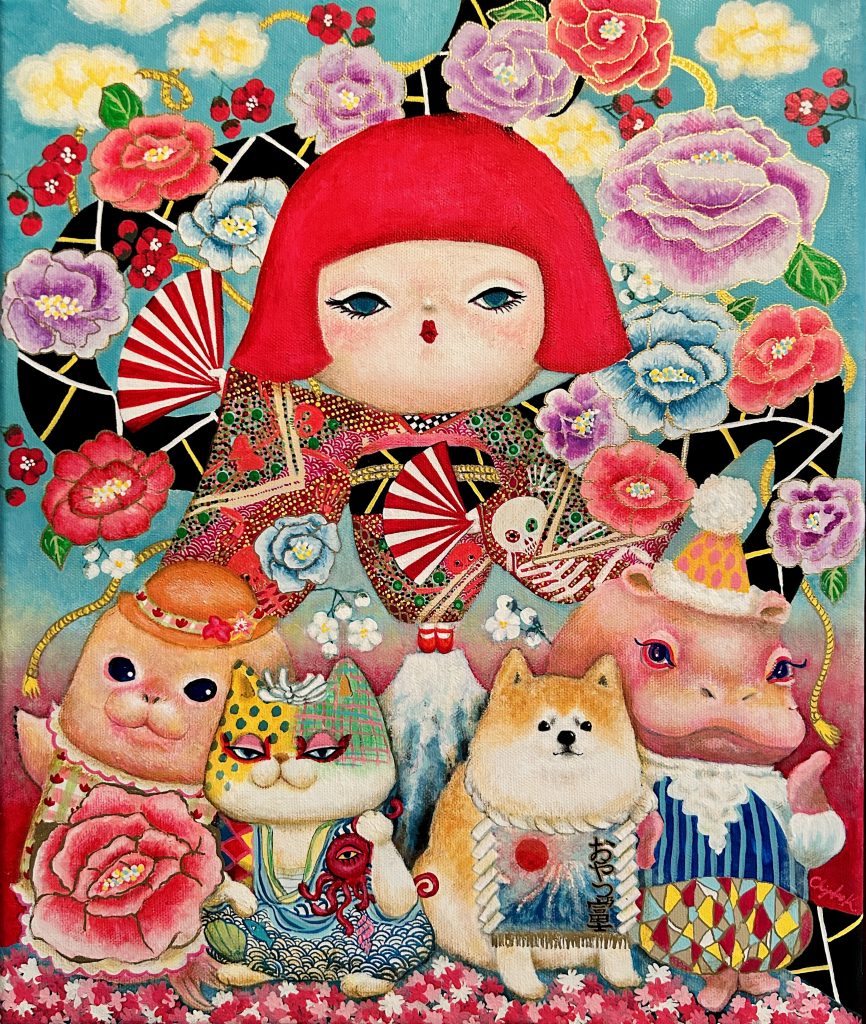
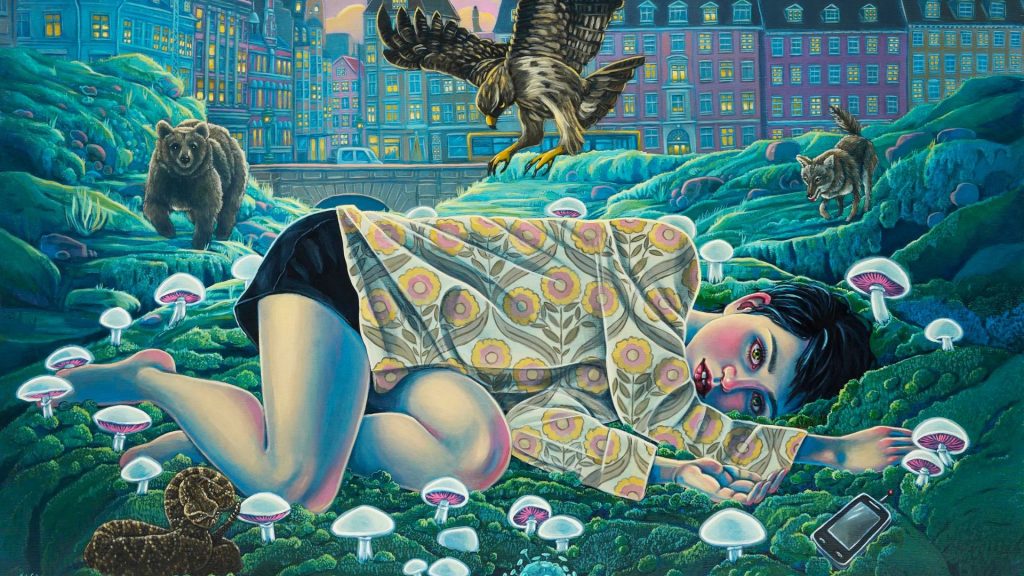
From the woods and coastlines of Maine comes an artist who has never questioned their calling—only what it means to pursue art professionally in today’s world. Their journey from avoiding watercolor in college to embracing it as a medium of courage and growth reflects a broader artistic philosophy: trust the process, find beauty in unexpected places, and remember that art begins with love, not obligation.
Currently preparing for their first solo collection at Poetic Tiger Gallery this November 2025, this artist creates work that finds elegance in nature’s cycles, comfort in solitude, and universal connection in the most human experiences of grief, wonder, and renewal.

Where Are You From?
Maine, US
Where do you long to live (reality or fantasy)?
Somewhere the woods meets the ocean. Where I can have a studio but also procrastinate by going pretty places outside.
What started you on your journey into art professionally?
I’ve only ever had one answer to the “What do you want to be when you grow up” question – being an artist, in my mind, has never been up for debate. What it means to be a “professional” artist still feels like an open ended question, I’m still figuring that part out. I’m a millennial, so I’ve seen both sides of a big turning point in art history with the innovation of the internet and social media.
The hurdle of getting artwork in front of an audience is much, much smaller, and still evolving. Taking that step from passion to career started with making and selling my own prints online, which I still do today. Beyond that I’m still working on finding my direction, working in illustration and with galleries. I’m currently putting together my first solo collection.

How has your art changed and evolved over the years?
Well, there’s that one bit in my time in college when I tried watercolor, loathed it, and swore off of it forever. Clearly things have changed since then, ha.
One thing that I can visually track through my portfolio is that over time I’ve gotten a lot braver, especially in the years since
I’ve been working in watercolor. I can remember a time when I was overwhelmed by the idea of filling an entire space with details – I was pretty confident that I simply Could Not draw or paint plants.
I’ve learned a lot about what stages of my workflow benefit from slowing down – taking time to plan things out, to do preliminary studies, trusting the process and pushing through the “ugly” stages. How to see visually complicated things and break them down into smaller, simpler parts of a whole. Looking at a tree and thinking about painting it all at once can be dizzying – but I can look at a leaf, and start from there.
If your artwork could come to life and interact with you, what kind of conversation would you have with it?
Hmm….that’s an interesting question. My subjects tend to be either in states of inward reflection or dead, so maybe we’d just sit quietly for a while and enjoy the surrounding nature together.

What is the one statement you could give to your younger self that you would give anything to go back and relay to them at a pivotal moment?
Somewhere along the line (I literally cannot remember where or when) someone planted the ridiculous idea in my brain that using references was cheating, or rather that not using references somehow demonstrated greater strength as an artist. I’m embarrassed to say I took this to heart…..way too strongly, for way too long.
It did teach me how to really study things that I see and commit important details to memory, which can be a really useful tool, but since incorporating references into my process the growth has been undeniably exponential.
I can work faster, my subject matter and understanding of color has expanded, and I’m all around less miserable across the whole process.
Everything in my artistic journey has helped me get where I am today, but damn, it stings thinking about how it’d be different if I hadn’t let such a silly comment affect me that much.

In what ways do you think your personal experiences and emotions shape the way you connect with your work?
Deeply. I grew up in very rural towns in Maine, I spent a lot of time outside, and a lot of time alone. I’m pretty comfortable with filling time with my imagination and quietly observing the world around me.
I see a lot of beauty in things that make a lot of people uncomfortable – decay, the grotesquery of nature and life cycles. I consider my work to be death positive, and living in a place with strongly changing seasons and unforgiving winter, the inevitable breakdown and regrowth of living things is hard to ignore.
With that comes some pretty big existential questions, and contemplation of some difficult emotions like grief and fear. Accepting that these things cannot be changed and that there is even a lovely elegance in that fact brings me a lot of comfort.
What is the most unexpected thing to occur with your work through the years that shifted your perspective in a way you never anticipated?
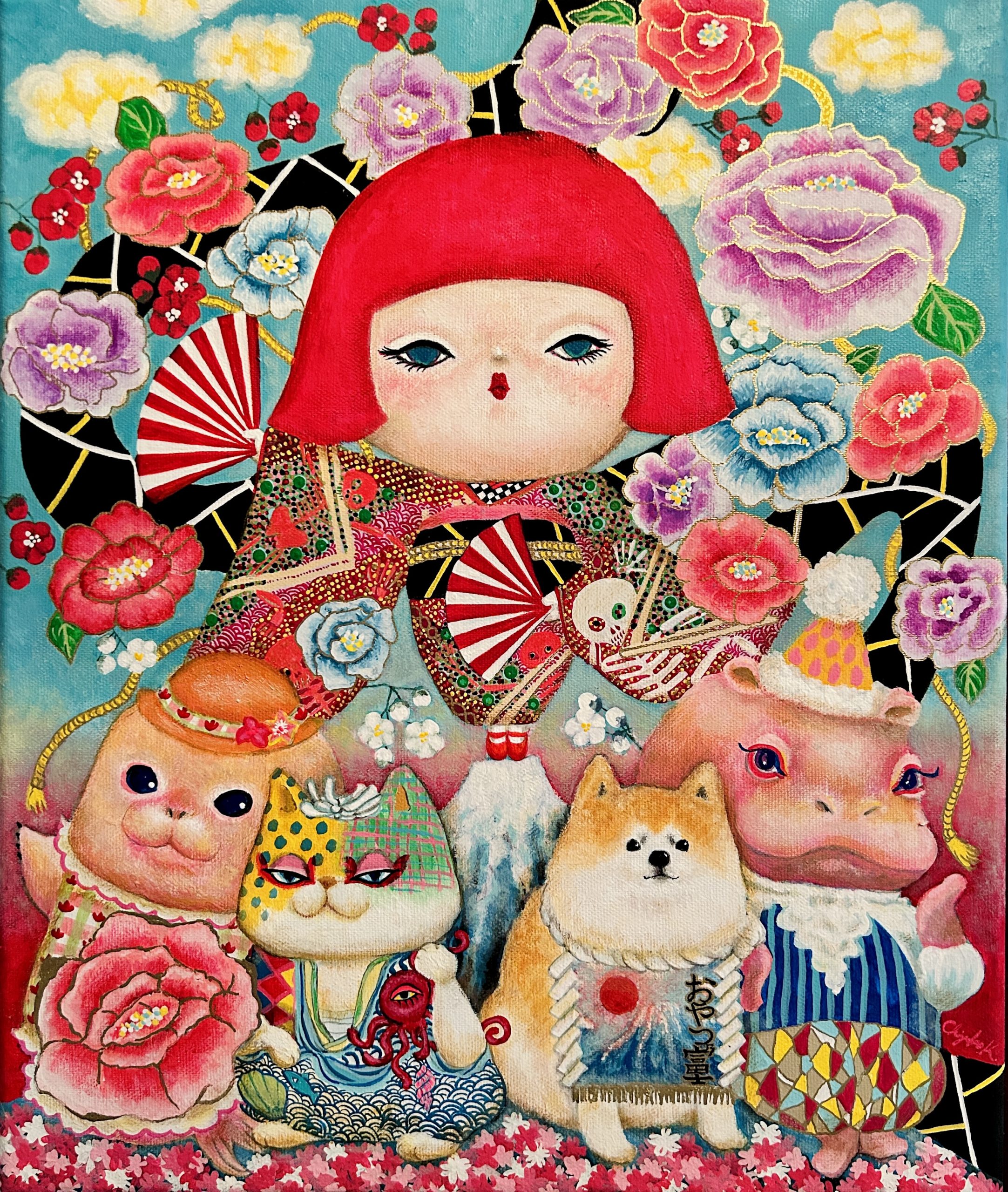
Getting into fan art. In 2019 I was going through one of the worst and longest art blocks of my life. I felt directionless and disconnected and unmotivated. I started doing pen doodles of characters from TV shows I liked, just for fun. I never intended for these to see the light of day, but an artist friend urged me to post them on social media, through which I found entire new communities of artists and audiences and friends that I wouldn’t have otherwise.
More importantly though, I found artistically exploring something in an entirely different medium and subject matter got me excited about art again. It felt like I was making things for me, not because I had to but because I wanted to, and it was really fun!
It was incredibly eye opening to the value of remembering that drawing and painting started as a love first, and a job second. It’s something I still dabble in when I just need a change or a break – some of my favorite pieces are works of fan art.

Have you ever imagined your art as a time capsule—what do you think future generations would think of it?
My hope is that future generations’ connection to the work won’t be far off from what it is today.
The things I prioritize when I make new work are connected more to the experience of being human than to a specific time – emotions, sensory memories, grief, the relationship of life and death, connections to nature.
I’d like to think that these things are fairly universal and that as long as there’s people, my art will still resonate in some way.
We have a thing for oversharing...
New artist interviews, articles, books and more!
What advice would you give an artist starting out (young, middle-aged, old – any age) who wants to do it professionally?
I think burgeoning artists sweat way too hard about having a “style”.
Artistic style is something that will just happen on its own, it’s like handwriting. Trying to force a style or stick to rules and guidelines of something specific shuts down so many opportunities for growth and self discovery.
Play with different mediums, explore all kinds of subject matter, stop fretting so soon about having a “unified” portfolio – that’s something that you can make happen later when you need one. Letting yourself try things and finding what excites you artistically will let your style develop on its own without you having to think about it.
Quit worrying so much!