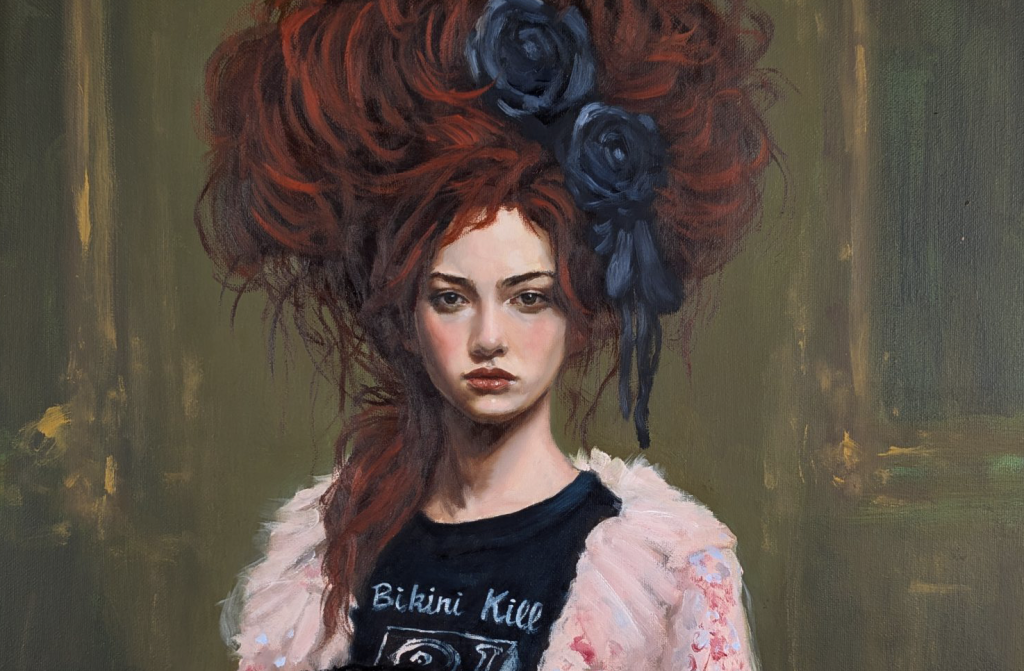
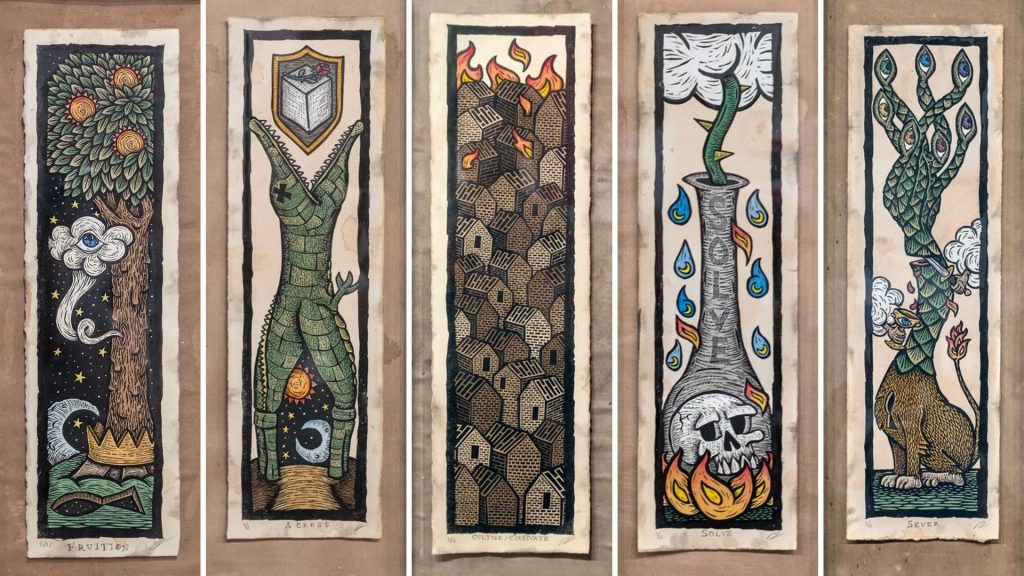
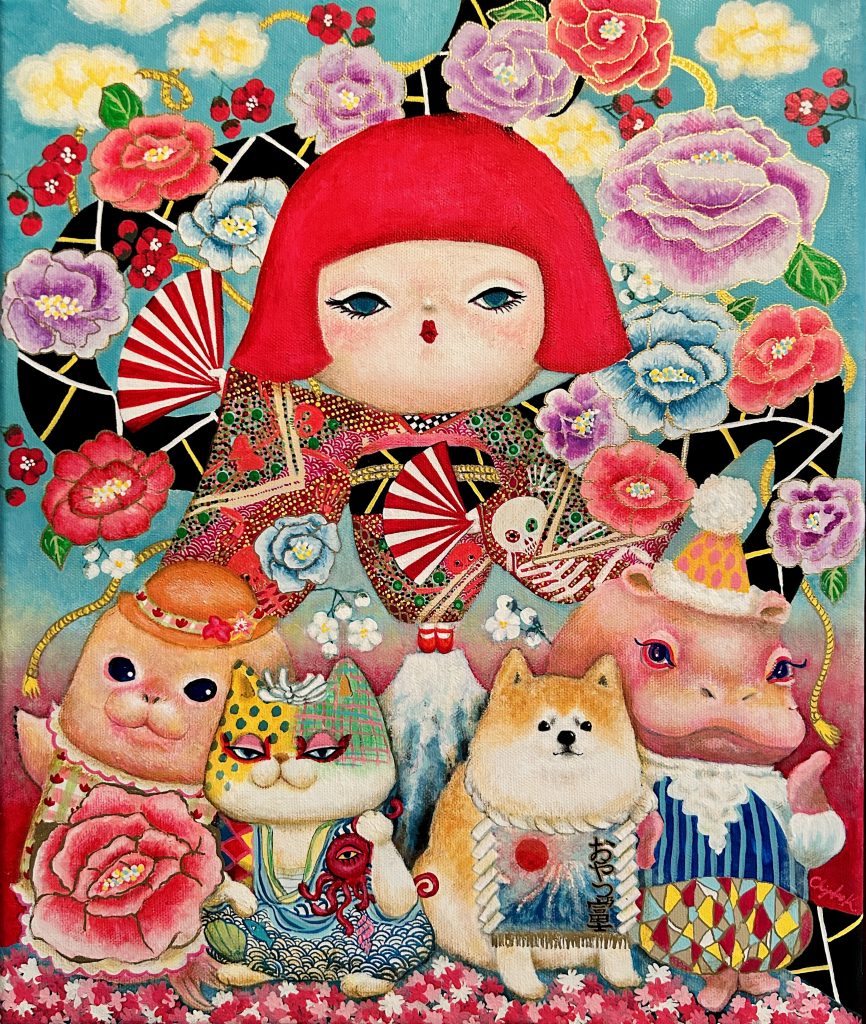
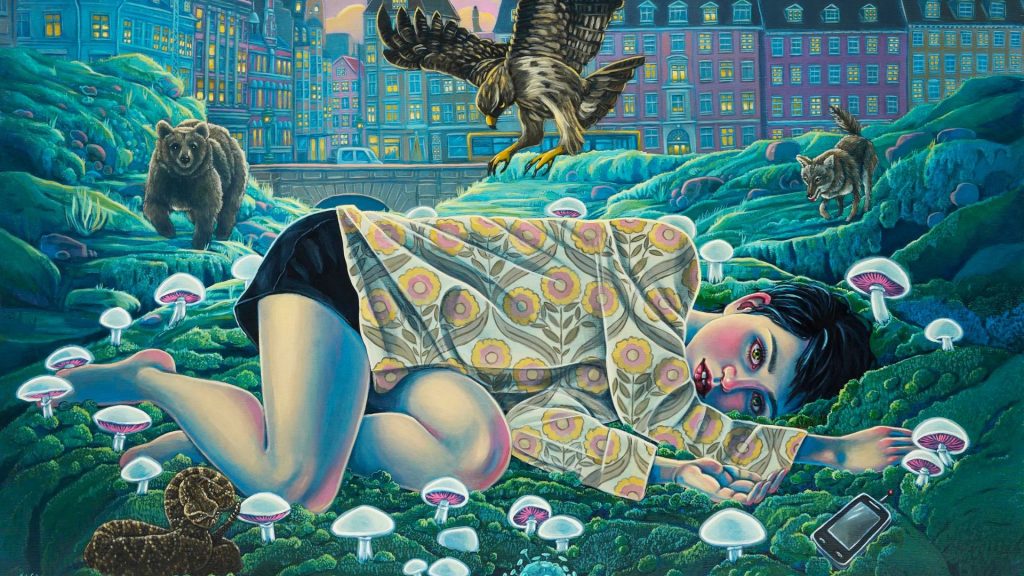
The Art of Adapting by Elaine Nesbitt
I realized that the initial reaction of artists was not working to change our predicament. The impact of AI on my artist peers was an immense distress.
An incident of severe spinal injury left me bereft of proper use of my hands for many months, with the threat of paralysis and their complete functional loss. In tandem, AI imagery and its early, unique visual aesthetic rose to prominence on social media. I recognized AI as a tool that could empower me to create with little need of all that I could lose from further spinal disfigurement and vertebral collapse, a high potential with my life-threatening diagnosis.
When I trialed generative AI in its early stage, I felt a significant creative disconnect—a seed of disappointment due to its low-effort and ease of addictive use—yet was hopeful for its progression towards a more artistically involved dynamic. I wanted to uncover a means of integrating AI into my existing intricate artwork that could create a puzzle-like challenge for painting artists. Over a period of months, I successfully achieved this entanglement between randomized AI photo collage and detailed digital painting for gallery practice, only to uncover AI’s darker, unregulated origin and rampant, burgeoning misuse.
The impact of AI on my artist peers was an immense distress. After months of research on generative models and proposed arguments from both sides, I determined that I could not continue to support anything that tore our community apart, in spite of the hopes I had once had of AI for myself.
Overtime, I watched the presence of AI generative imagery gradually destroy the joy and hopefulness many artists of all skills and practices possess on a global scale. This loss is my first cloying thought when opening social media today and, as a person of action, I needed to help shift the narrative—to show the value of traditional digital art, a medium I love being negatively associated with AI and diminished in value to physical collectors.
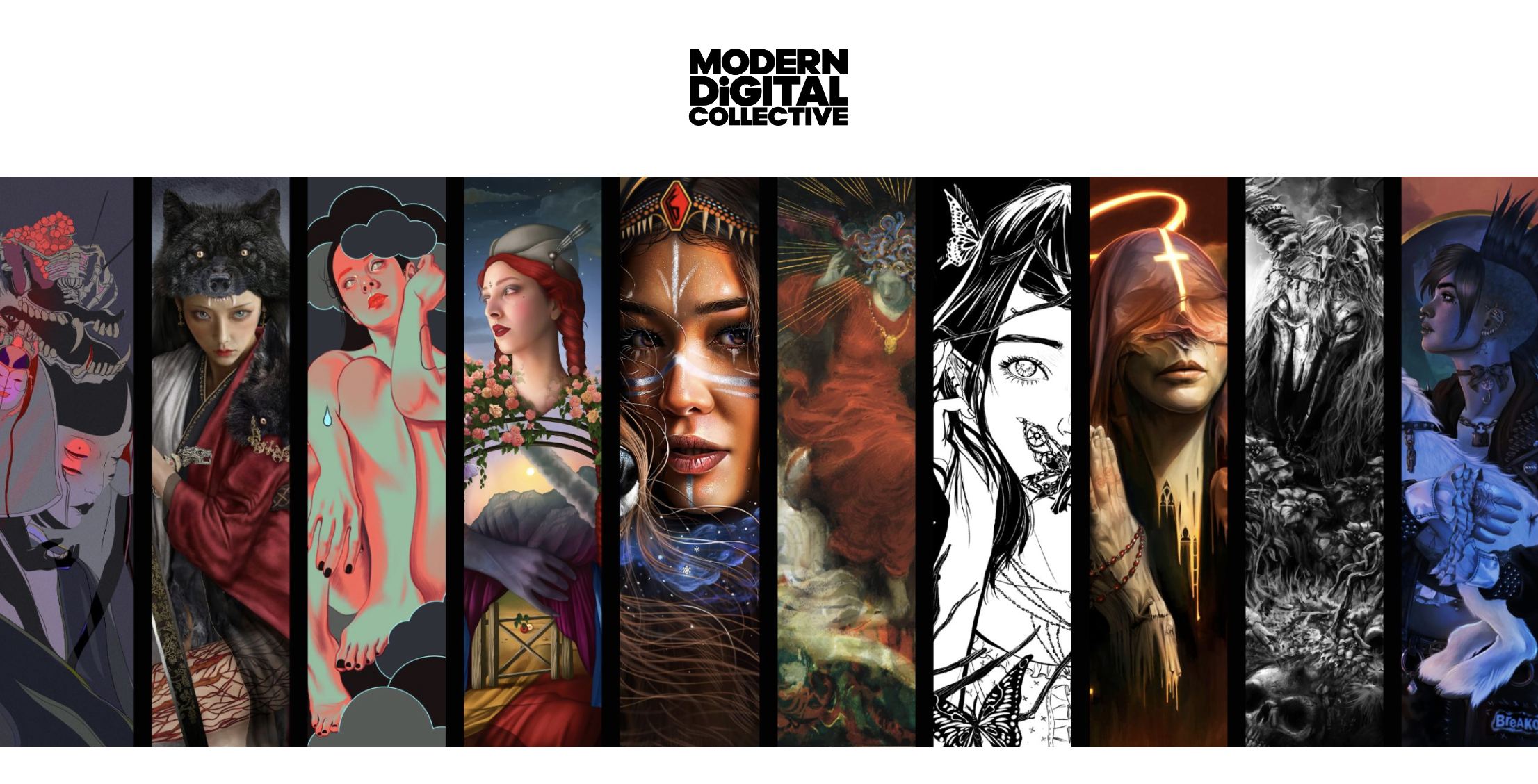
Modern DiGITAL Collective Introduction
Modern Digital Collective was born from this period of chaos and duress. I realized that the initial reaction of artists was not working to change our predicament and wanted to create a positive force to show traditional digital art, especially digital painting’s, value, without the need to ostracize or disregard and disrespect the unique human experiences of those on both sides of the argument, all the while still recognizing the rifts and long lasting emotional pain AI has caused for many artists. I was hopeful to make Modern Digital Collective and the “We Are Digital” online exhibition at Poetic Tiger Gallery, USA an early step in healing our broken communities, the creation of which I realized could not be accomplished alone.
Elaine Nesbitt (FAYBEL), Founder of MDC
moderndigitalcollective.com
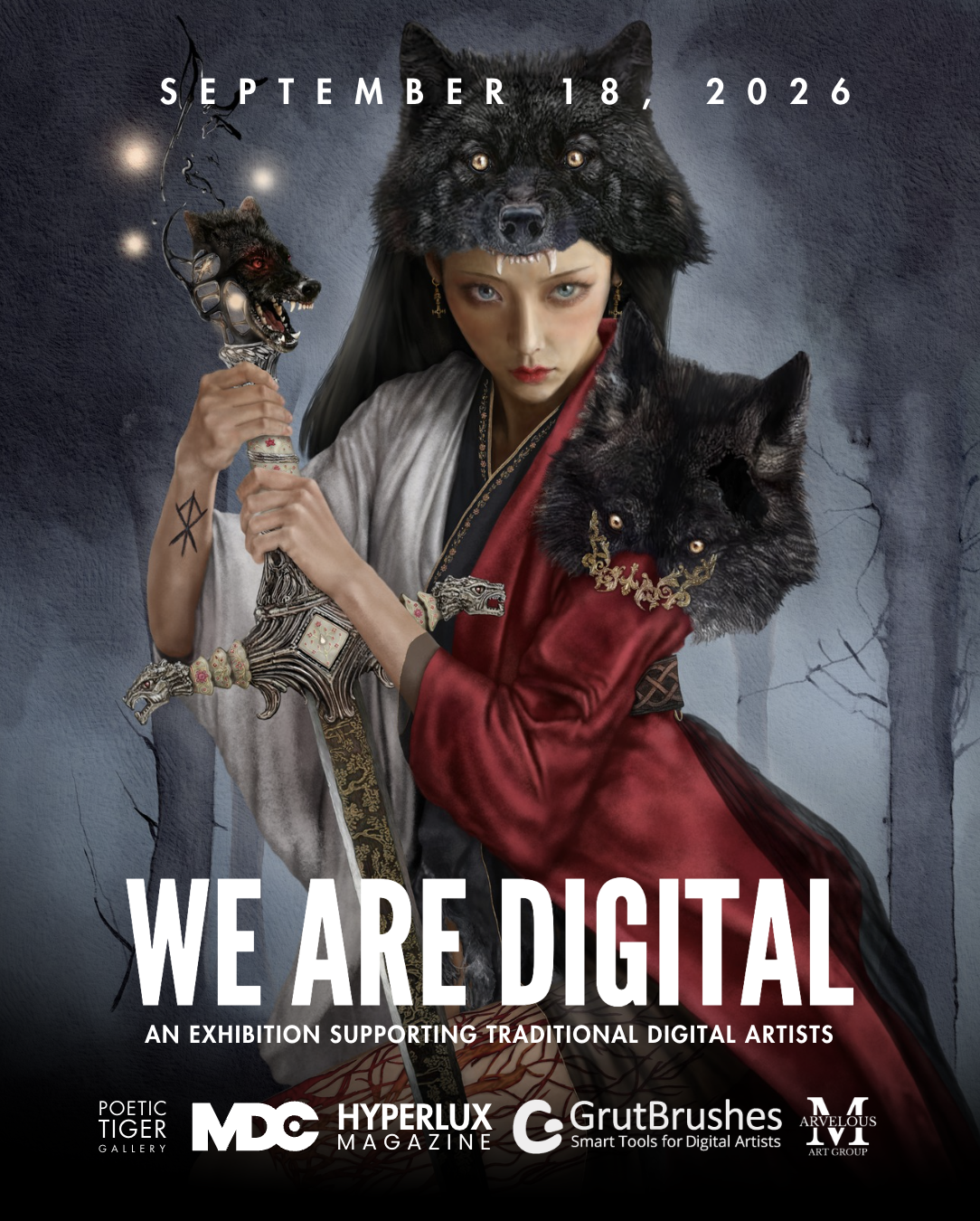
We Are Digital Exhibition Introduction
Over the last couple of years, it has become clear that artists creating digital art face a new battle. Digital art was not widely accepted for many years, and once it finally became an accepted medium in galleries and museums, the introduction of AI complicated things further.
There is so much to unpack when it comes to AI, but for this showcase, we wanted to focus specifically on how digital artists are being directly impacted by generative AI. Of course, there is good AI, and we do not want to vilify all AI. AI is helping with medical diagnosis, predicting cancer years in advance, flash flood and tsunami modeling, and wildfire interception. But when it comes to artists, and especially those working in editions and digital commercial art, generative AI sets a very different tone.
As a gallerist, this has pushed me to support digital artists who actually use the tools of the trade to create their work, rather than those who simply generate prompts. For almost 20 years of my career, I was a digital artist. I was allergic to traditional mediums, so digital was the road I had to take. As much as I wish I could have worked in traditional mediums, I am deeply thankful for the ability to create digitally. I would not have had a career if that had not been a viable path, and if galleries and other entities had not supported it.
Our goal with this exhibition is to highlight those in the field of digital art who are making an impact, speaking up, and supporting those who have fought to put digital art on the map as fine art. Digital art has always been essential to illustration and animation since its inception, but digital artists are equally important within fine art.
We invited each artist to write about how they feel generative AI has affected their career, which we share below. We are also sharing some statistics that reveal the real impact of generative AI.
WE ARE DIGITAL
Supporting Traditional and Digital Artists in the Age of AI
Opening: September 18th, 2026
Runs: September 18th – October 7th, 2026
Location Online: Poetic Tiger Gallery
Join Collectors Preview
Exhibiting Artists
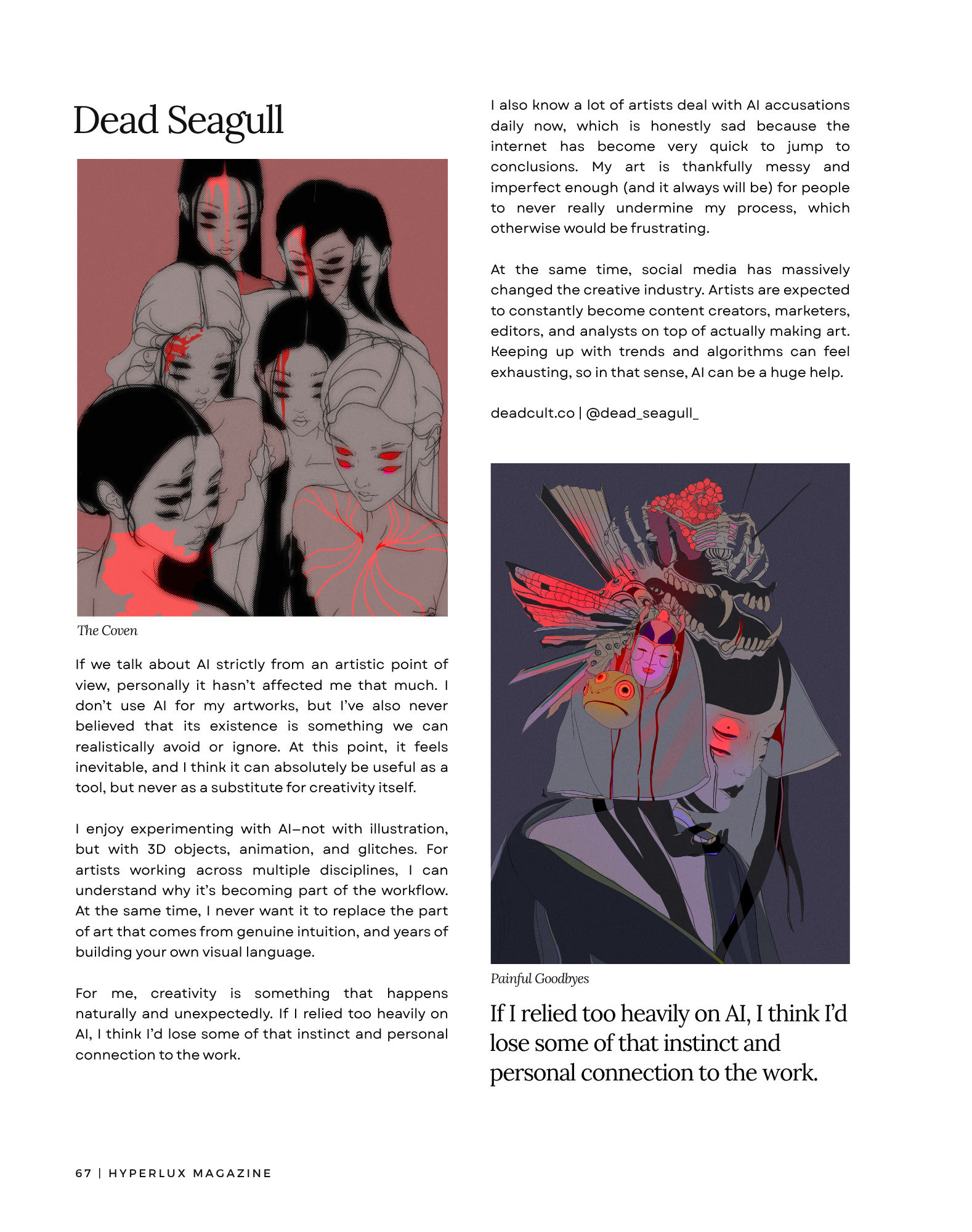
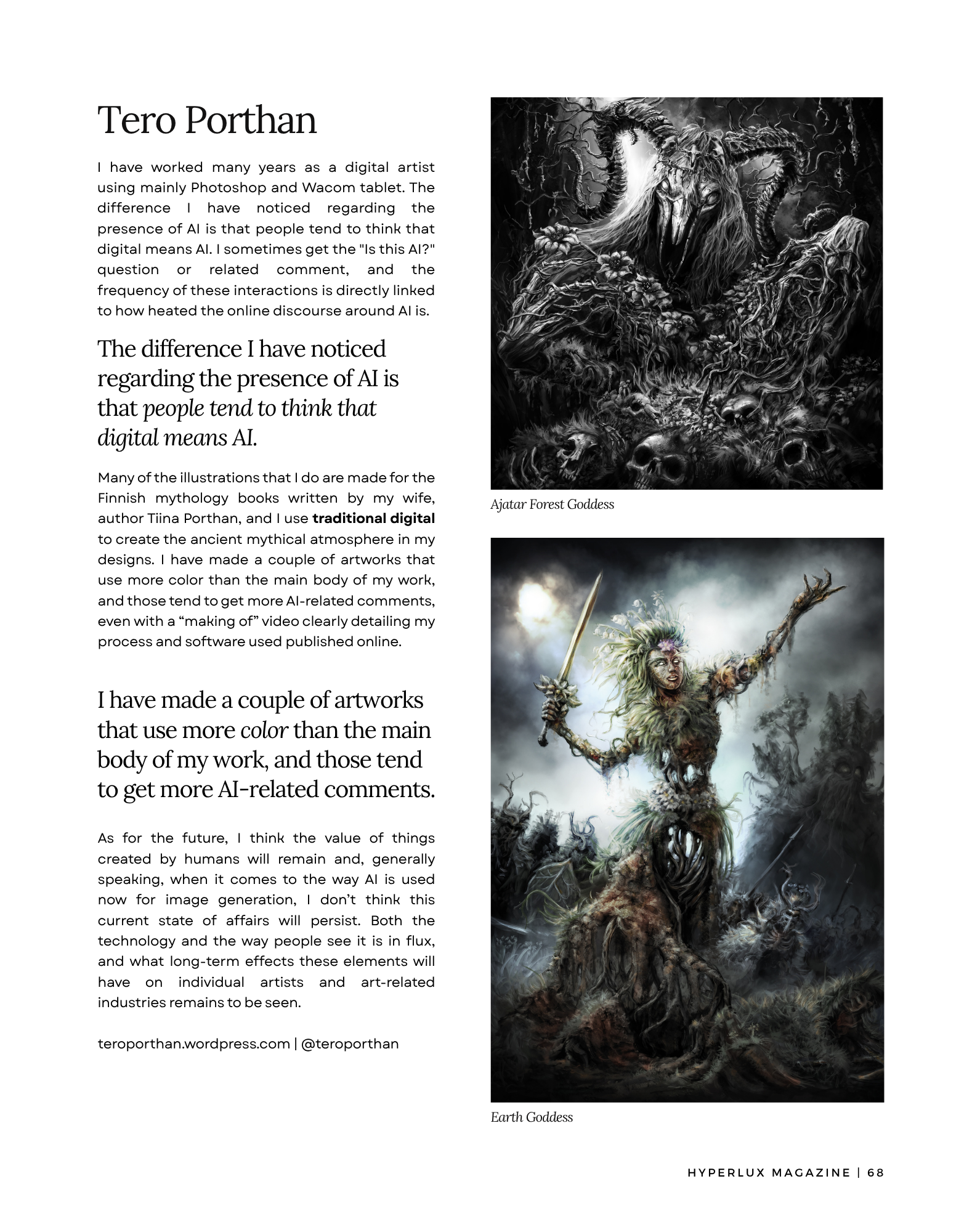
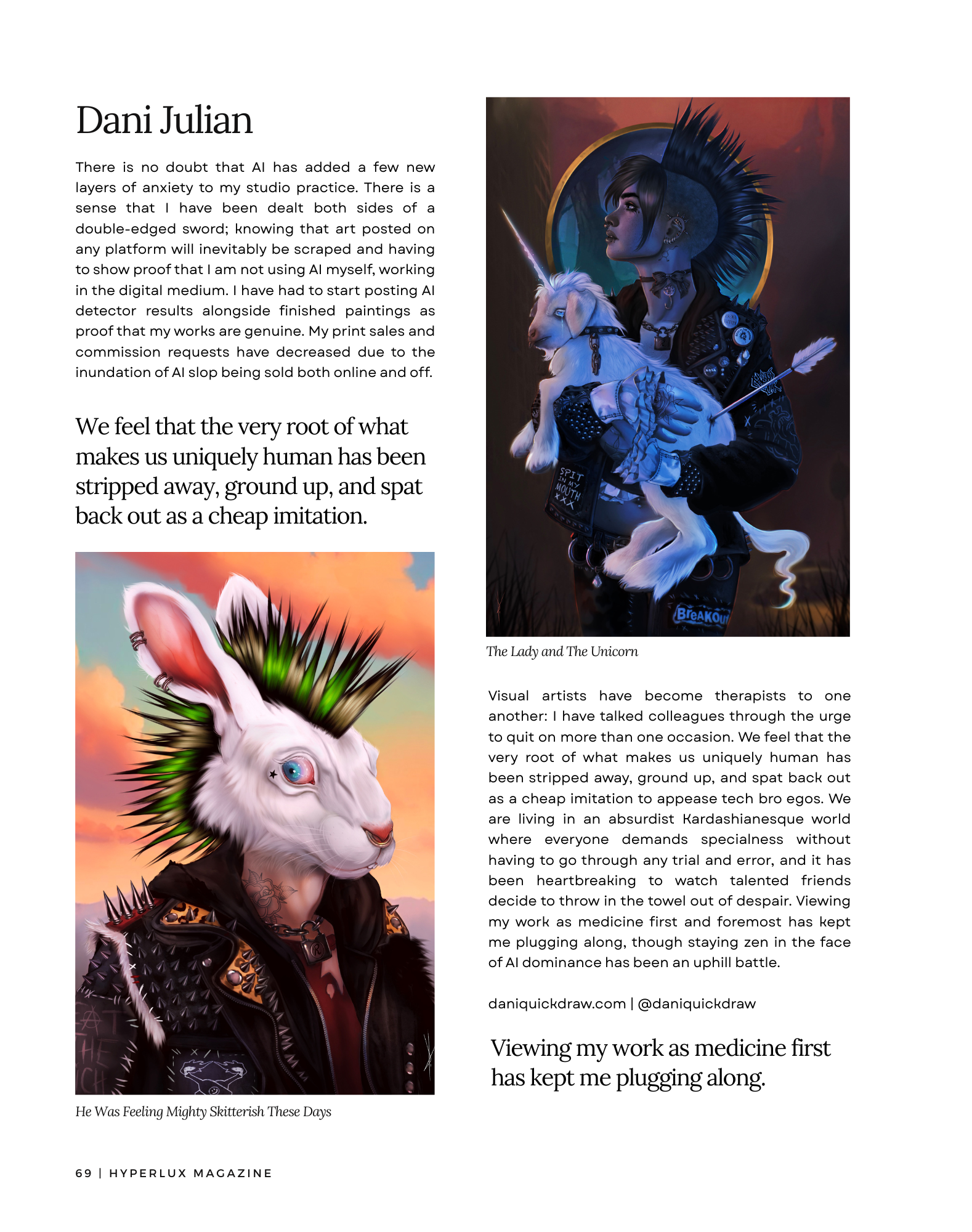
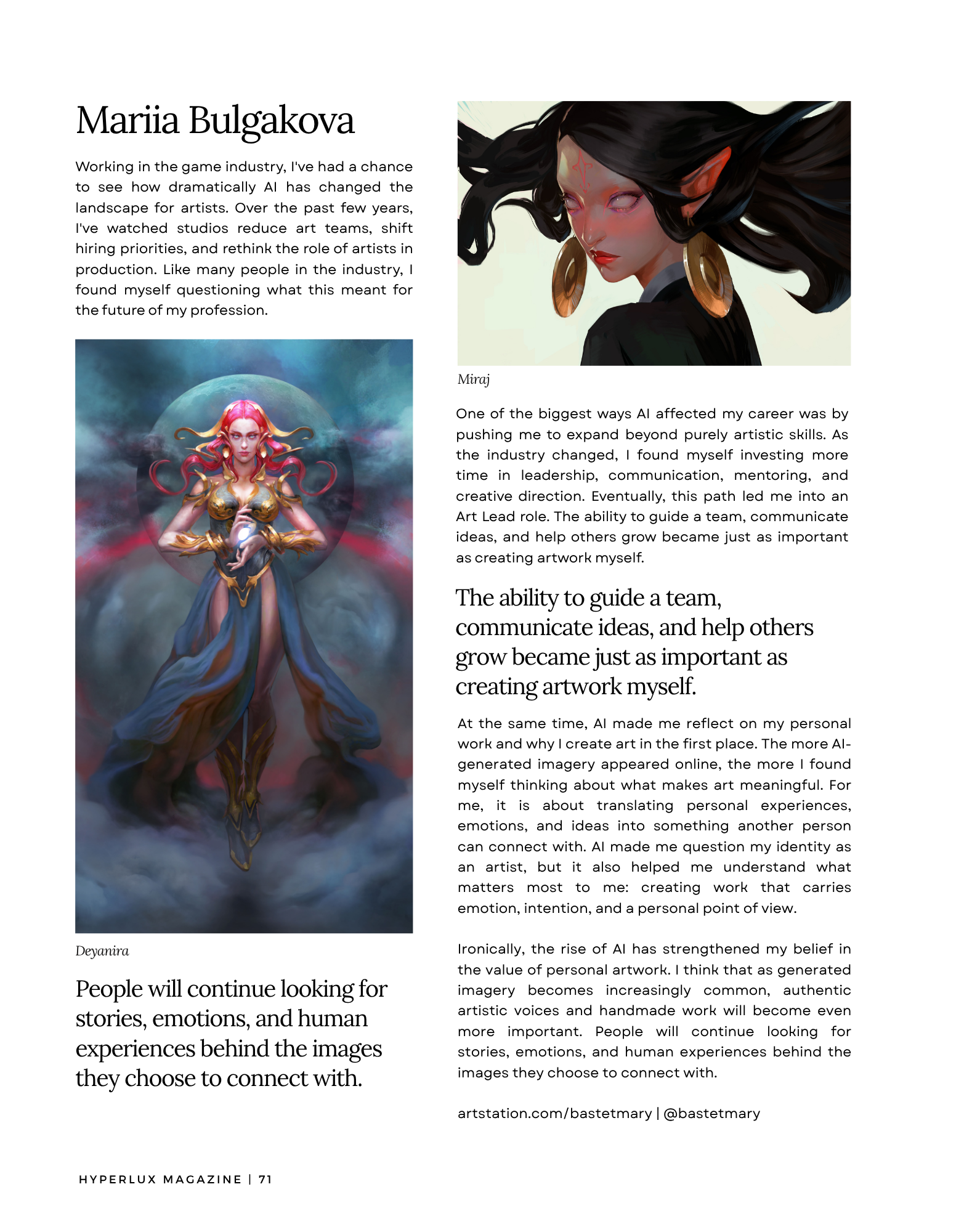
Dan Zollinger | Dani Julian | David Seidman | Dead Seagull | Eli Birdie | Farnoosh Aryan | FAYBEL (Elaine Nesbitt) | Harepo | JINSEIZU | Kate Laird | Mariia Bulgakova | Sara Lee | Sean Andrew Murray | Tero Porthan | Yaşar Vurdem
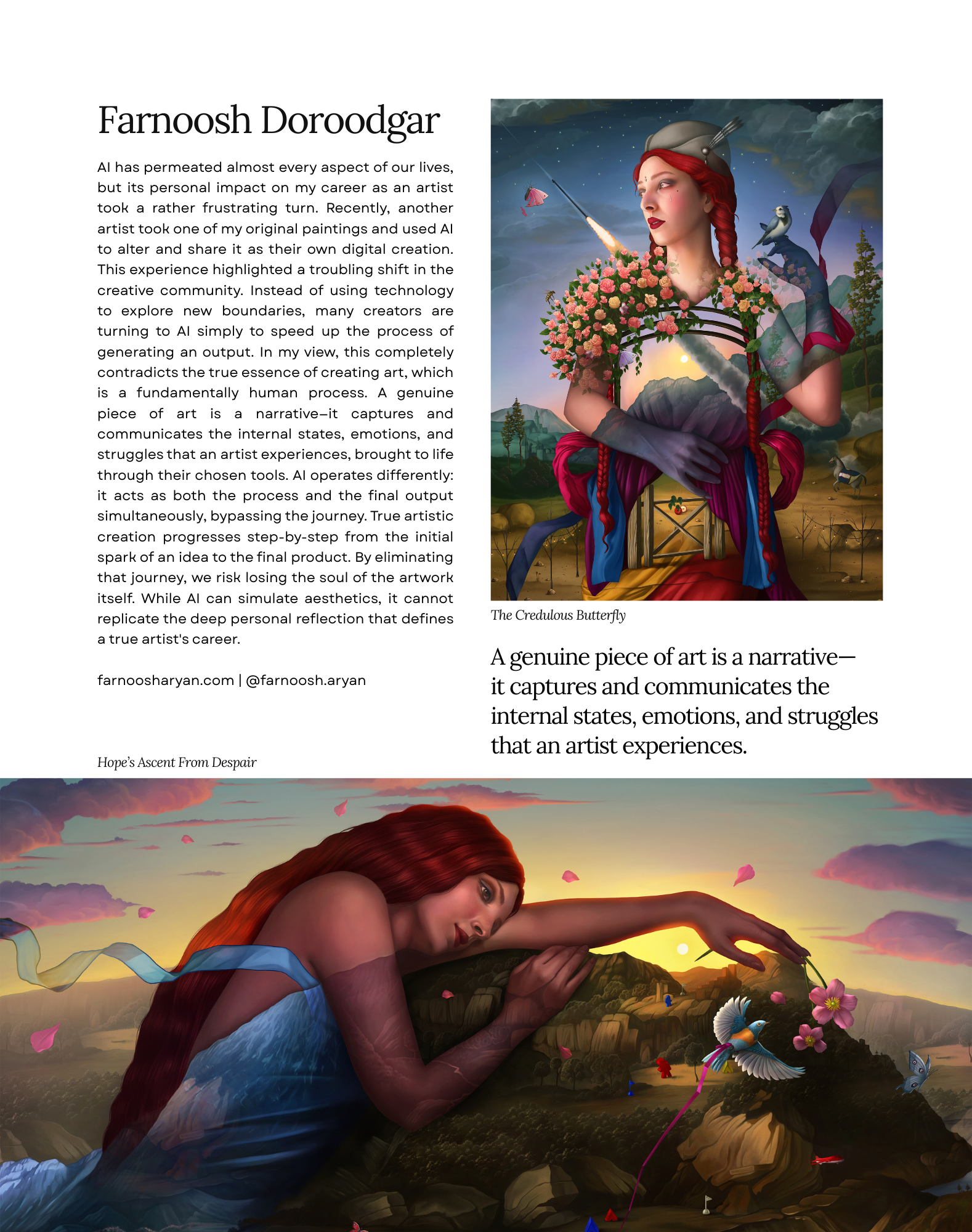
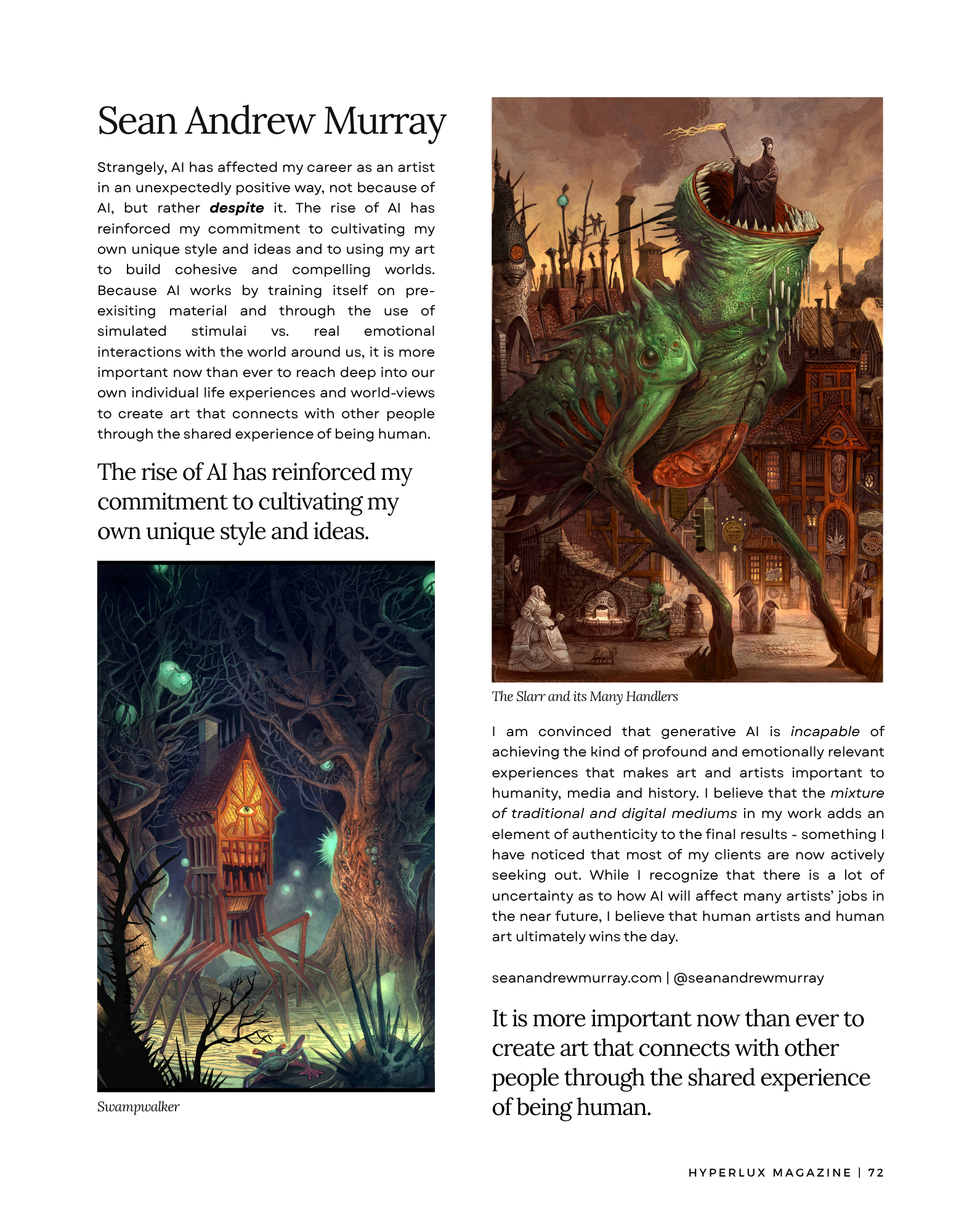
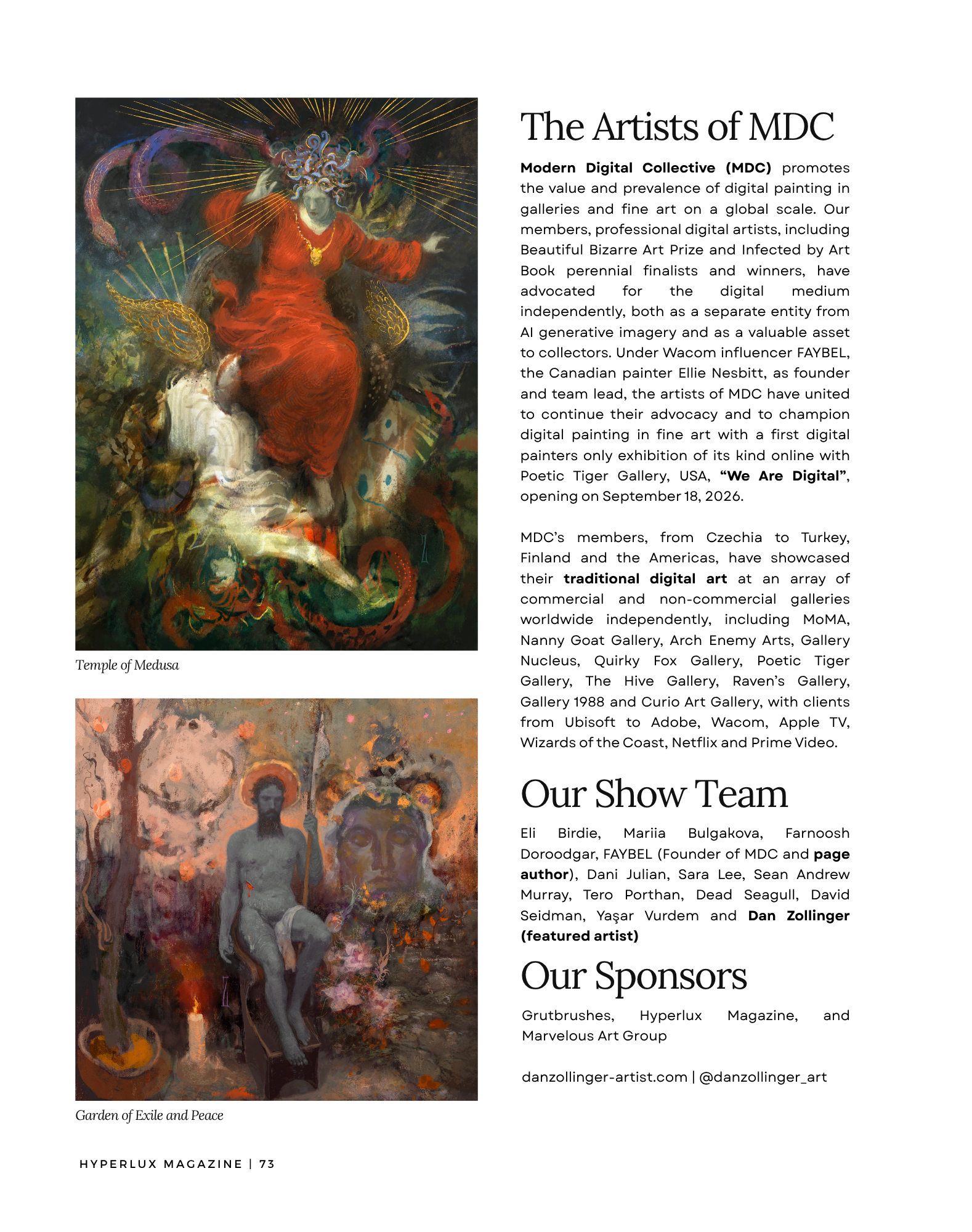
Exhibiting Artists Answering: How AI Has Affected Artists
Important Statistics
Disney confirmed on April 15, 2026 that approximately 1,000 employees would be cut
Marvel Studios was reportedly hit hardest, with around 8% of staff let go, particularly in visual effects
118,500 film/TV/animation jobs projected consolidated or eliminated by generative AI by 2026″ — Cartoon Brew (citing CVL Economics study commissioned by The Animation Guild/IATSE 839)
75% of entertainment business leaders say generative AI tools already supported job elimination or consolidation” — Cartoon Brew (same CVL Economics/Animation Guild study)
Surveyed visual artists reported overwhelmingly negative career and income impacts attributed to generative AI” — arXiv/CHI 2026 peer-reviewed study